
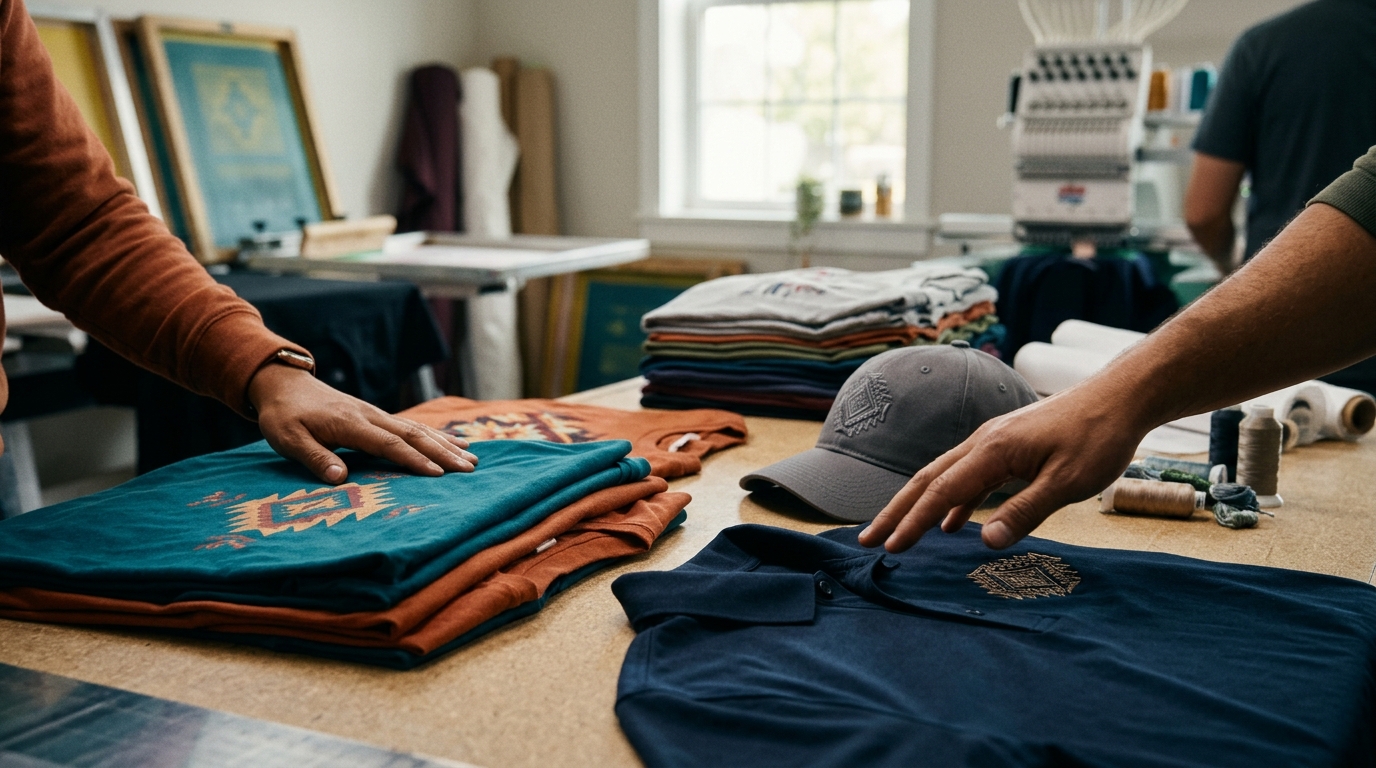
Embroidery is a stitching technique that creates raised, textured designs, while screen printing is a method of applying ink through a mesh stencil. For tribal organizations, embroidery offers a premium, durable finish ideal for hats and polos, whereas screen printing provides vibrant, cost-effective results for bulk t-shirt orders. Choosing the right method depends on your garment type, budget, and desired aesthetic.
Defining the Core Techniques
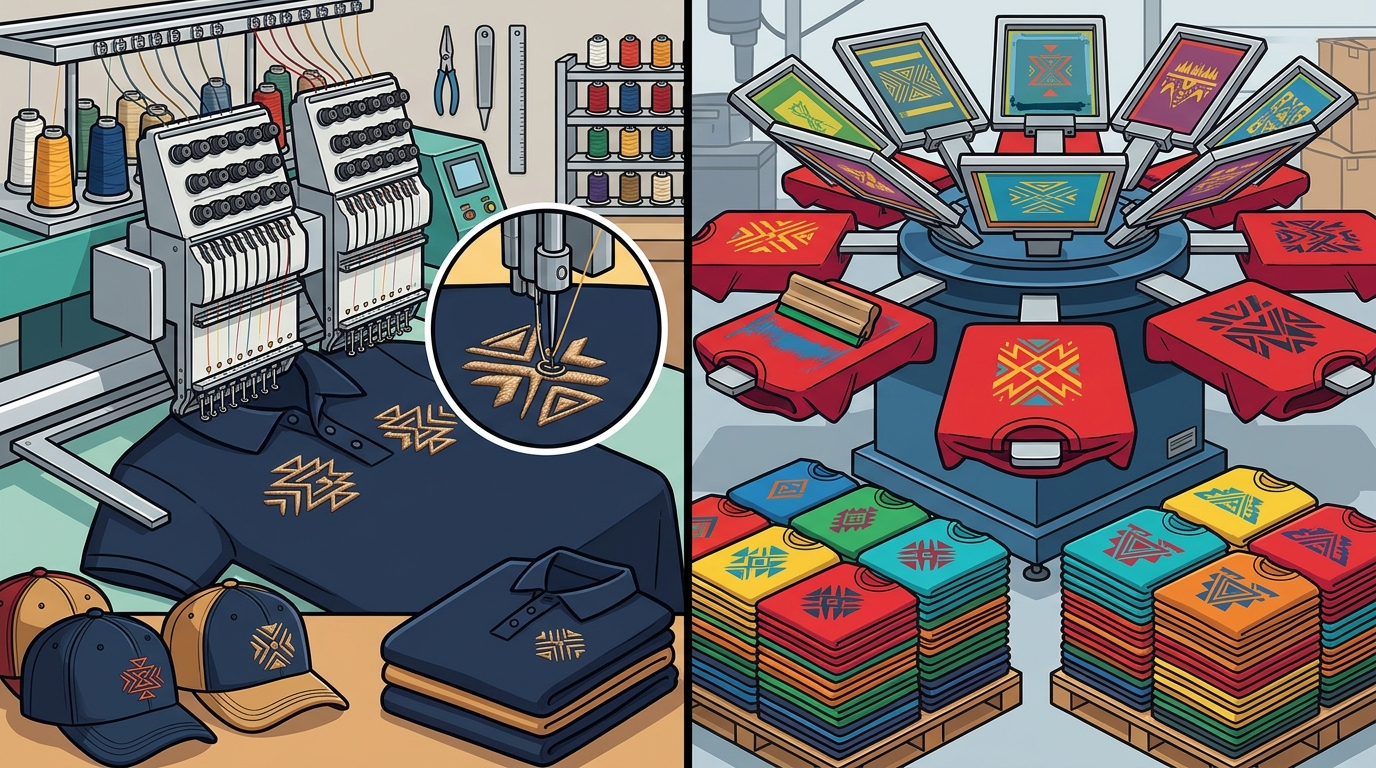
Understanding the mechanics of each method helps clarify their distinct applications. Screen printing is a process where ink is pushed through a mesh screen onto a substrate, allowing for large, flat areas of color. This technique is highly efficient for high-volume orders, as the setup time is amortized across hundreds of garments. It is the standard for t-shirts, hoodies, and sweatshirts where bold graphics are required.
In contrast, embroidery is a method of creating designs by stitching thread directly into the fabric using a computerized machine. This process results in a three-dimensional, textured appearance that feels premium to the touch. Because it uses thread rather than ink, the design is integrated into the garment's structure, offering exceptional longevity. It is the preferred choice for caps, jackets, and dress shirts where a clean, professional look is essential.
Visual Aesthetics and Brand Identity
The visual impact of each method significantly influences how a brand is perceived. Screen printing excels at reproducing complex, multi-color artwork with sharp edges and vibrant hues. For tribal organizations with intricate geometric patterns or detailed logos, screen printing can capture fine lines and gradients that stitching might simplify. This makes it ideal for event shirts and promotional apparel where visual pop is the priority.
Embroidery, however, conveys a sense of heritage and quality. The raised texture of the thread adds depth and dimension to a logo, making it stand out without relying on bright colors. This is particularly effective for formal wear, such as blazers or polo shirts, where a subtle, elegant presentation is desired. The tactile nature of embroidery also reinforces a brand's commitment to craftsmanship, aligning well with the cultural values of many Native American organizations.
Cost Efficiency and Order Volume
Budget considerations play a critical role in selecting the right production method. Screen printing is generally more cost-effective for large quantities. The initial setup involves creating screens for each color in the design, but once set up, the printing process is fast. This efficiency drives down the per-unit cost, making it the go-to solution for bulk orders of 100 or more t-shirts. Organizations planning large-scale events or annual giveaways will find screen printing to be the most economical choice.
Embroidery costs are typically higher per unit, especially for smaller orders. The cost is driven by the number of stitches in the design; more complex designs require more thread and machine time. However, for smaller quantities or higher-end garments, embroidery can be a worthwhile investment. It is important to note that while the upfront cost is higher, the durability of embroidered items often means they last longer, providing better long-term value for formal or frequent-use apparel.
Durability and Garment Longevity
The lifespan of the design is a key factor for organizations investing in long-term apparel. Screen printed designs are applied to the surface of the fabric. While modern inks are durable, they can crack or fade over time with repeated washing and wear. This is acceptable for short-term event shirts but less ideal for uniforms intended to last for several years. The flexibility of the ink allows it to move with the fabric, but it remains a surface layer.
Embroidered designs are stitched into the fabric, making them highly resistant to fading and cracking. The thread is bound to the material, so the design does not peel or crack in the same way ink might. This makes embroidery the superior choice for items that will be worn frequently and washed often, such as staff uniforms or leadership jackets. The durability of embroidery ensures that the organization's branding remains crisp and professional throughout the garment's life.
Choosing the Right Method for Your Needs
Selecting between embroidery and screen printing requires evaluating the specific use case for the apparel. For casual event wear, t-shirts, and hoodies, screen printing is the recommended choice due to its ability to handle complex graphics and lower cost per unit. For formal wear, caps, and items intended for long-term use, embroidery provides a premium finish and superior durability. Many organizations use a combination of both, opting for screen printed t-shirts for large gatherings and embroidered caps or jackets for leadership and formal occasions.
At Skyy Screen Printing, we offer both services to help you make the best choice for your organization. Our team can guide you through the process, ensuring that your apparel reflects your values and meets your practical needs. Whether you need a bulk order of vibrant t-shirts or a small batch of premium embroidered jackets, we are here to help.
Key Takeaways
- Screen printing is best for bulk t-shirts and complex, multi-color graphics.
- Embroidery is ideal for caps, jackets, and formal wear, offering a premium look.
- Screen printing is more cost-effective for large quantities of 100+ items.
- Embroidered designs are more durable and resistant to fading over time.
- Choose screen printing for vibrant, flat designs and embroidery for textured, 3D effects.
- Many organizations use a mix of both methods for different apparel types.
Frequently Asked Questions
Can I use both embroidery and screen printing on the same garment?
Yes, it is possible to combine both techniques on a single garment, though this is less common. For example, a jacket might have an embroidered logo on the chest and a screen printed design on the back. This allows for a mix of textures and visual styles, but it can increase the overall cost and production time.
Which method is better for intricate tribal patterns?
For intricate patterns with many fine lines and colors, screen printing is often the better choice. It can capture detailed artwork more accurately than embroidery, which may simplify complex designs due to the limitations of thread stitching. However, for simpler, bold logos, embroidery can look very striking.
Does embroidery look good on all types of fabric?
Embroidery works best on sturdy fabrics like cotton, polyester, and wool. It is not recommended for very thin or delicate fabrics, as the stitching can distort the material. Screen printing, on the other hand, can be applied to a wider variety of fabric types, including lighter materials.
How long does it take to produce embroidered items compared to screen printed items?
Screen printing is generally faster for large quantities, as the process is highly efficient once the screens are set up. Embroidery can take longer per item, especially for complex designs, but it is still a relatively quick process for smaller orders. Turnaround times can vary based on the complexity of the design and the current workload.
Is embroidery more expensive than screen printing?
Generally, yes. Embroidery tends to have a higher per-unit cost than screen printing, especially for smaller orders. However, the cost difference depends on the complexity of the design and the quantity ordered. For large bulk orders of simple designs, the cost difference may be less significant.
Can I get a sample before placing a large order?
Yes, it is highly recommended to request a sample before placing a large order. This allows you to see the quality of the work and ensure that the design meets your expectations. At Skyy Screen Printing, we can help you with the sampling process to ensure you are satisfied with the final product.
Conclusion
Choosing between embroidery and screen printing for your tribal organization's apparel depends on your specific needs, budget, and desired aesthetic. Screen printing offers vibrant, cost-effective solutions for bulk t-shirts, while embroidery provides a premium, durable finish for formal wear and caps. By understanding the strengths of each method, you can make an informed decision that best represents your organization's identity and values. For expert guidance and high-quality production, request a quote from Skyy Screen Printing today.