
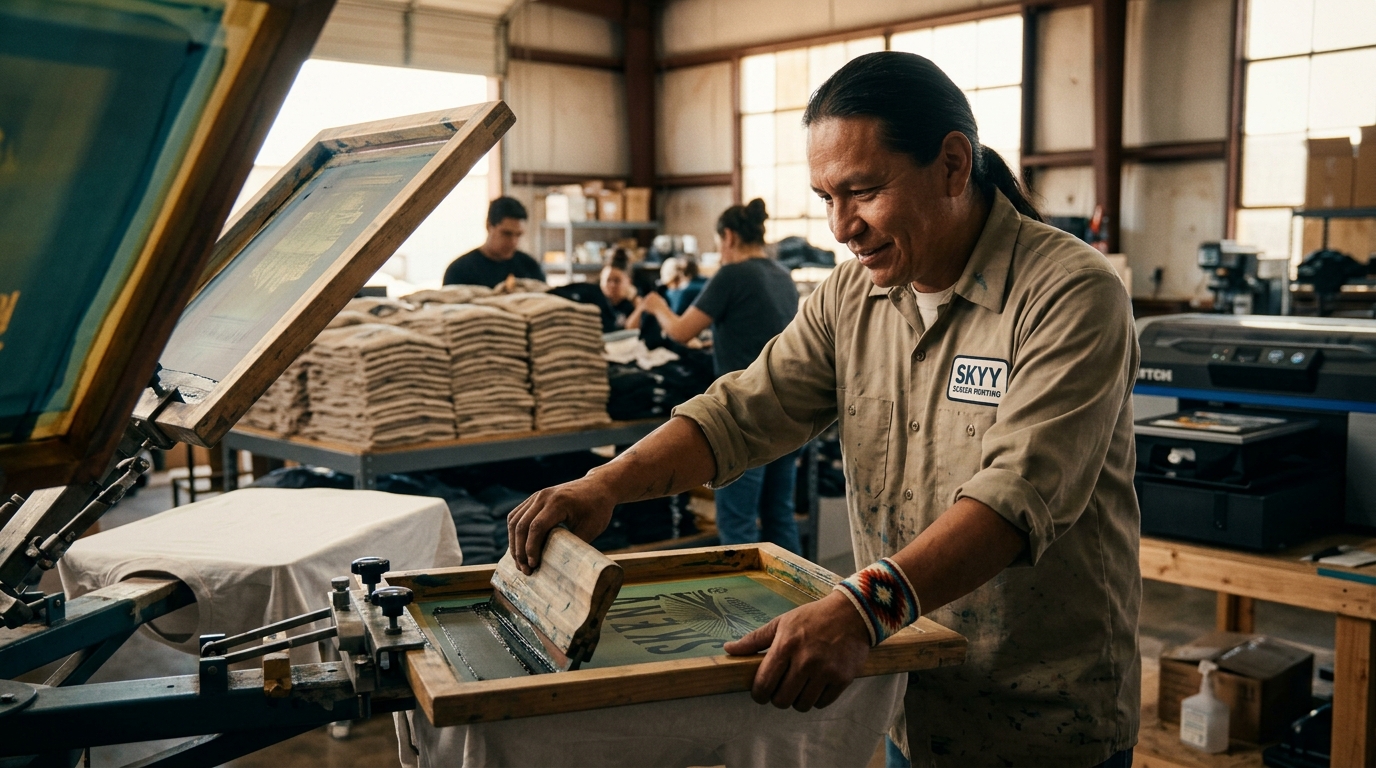
Choosing the right production method is the single most critical decision in custom apparel manufacturing. Screen printing remains the industry standard for bulk orders, while Direct-to-Garment (DTG) technology dominates the realm of detailed, low-volume designs. According to recent industry analyses, screen printing reduces per-unit costs by up to 60% when orders exceed 24 pieces, making it the financial winner for large-scale deployments. This article dissects the operational differences, cost structures, and quality metrics of both methods to help you make an informed choice. (About Skyy Screen Printing)
Understanding Screen Printing
Screen printing is a stencil-based technique that forces ink through a mesh screen onto the fabric. This method requires creating a separate physical screen for each color in a design. The process is mechanical, tactile, and deeply rooted in printing history. Screen printing is a method of transferring ink onto a substrate by forcing it through a mesh screen. (About Skyy Screen Printing)
The workflow begins with art preparation, where designers separate colors into individual layers. Each layer corresponds to a specific screen. Once the screens are exposed and washed, they are mounted on the press. The operator aligns the garment and applies the ink using a squeegee. This manual alignment ensures precise registration, which is vital for complex logos. (Bulk Custom T Shirt)
At Skyy Screen Printing, we leverage this traditional yet powerful method to deliver vibrant, opaque colors on dark garments. Because the ink sits on top of the fabric fibers rather than soaking in, the result is bold and highly visible. This opacity is crucial for tribal organizations, sports teams, and corporate events where brand visibility is paramount. The durability of screen-printed ink is legendary, surviving hundreds of wash cycles without significant fading. (Merch Apparel Resources from)
Understanding Direct-to-Garment Printing
Direct-to-Garment (DTG) printing operates similarly to a standard office inkjet printer. It uses specialized water-based inks that are sprayed directly onto the garment surface. This technology eliminates the need for physical screens, allowing for rapid prototyping and on-demand production. Direct-to-Garment printing is a digital textile printing process that uses inkjet technology to print directly onto garments.
DTG is ideal for designs with photographic details, gradients, or unlimited colors. Because it is digital, there are no setup fees for color separation. This makes it economically viable for single-unit orders or small batches. However, DTG requires pre-treatment of the garment to ensure ink adhesion, particularly on cotton fabrics. This pre-treatment step adds time to the production cycle.
The visual aesthetic of DTG is distinct. The ink penetrates the fabric, resulting in a softer hand feel compared to the thick layer of plastisol ink used in screen printing. While this feels more like wearing the print itself, it can sometimes lack the vibrancy needed for high-contrast designs on dark shirts. For detailed artwork, DTG offers superior resolution, capturing fine lines and subtle color shifts that screens cannot replicate.
Cost Analysis and Pricing Models
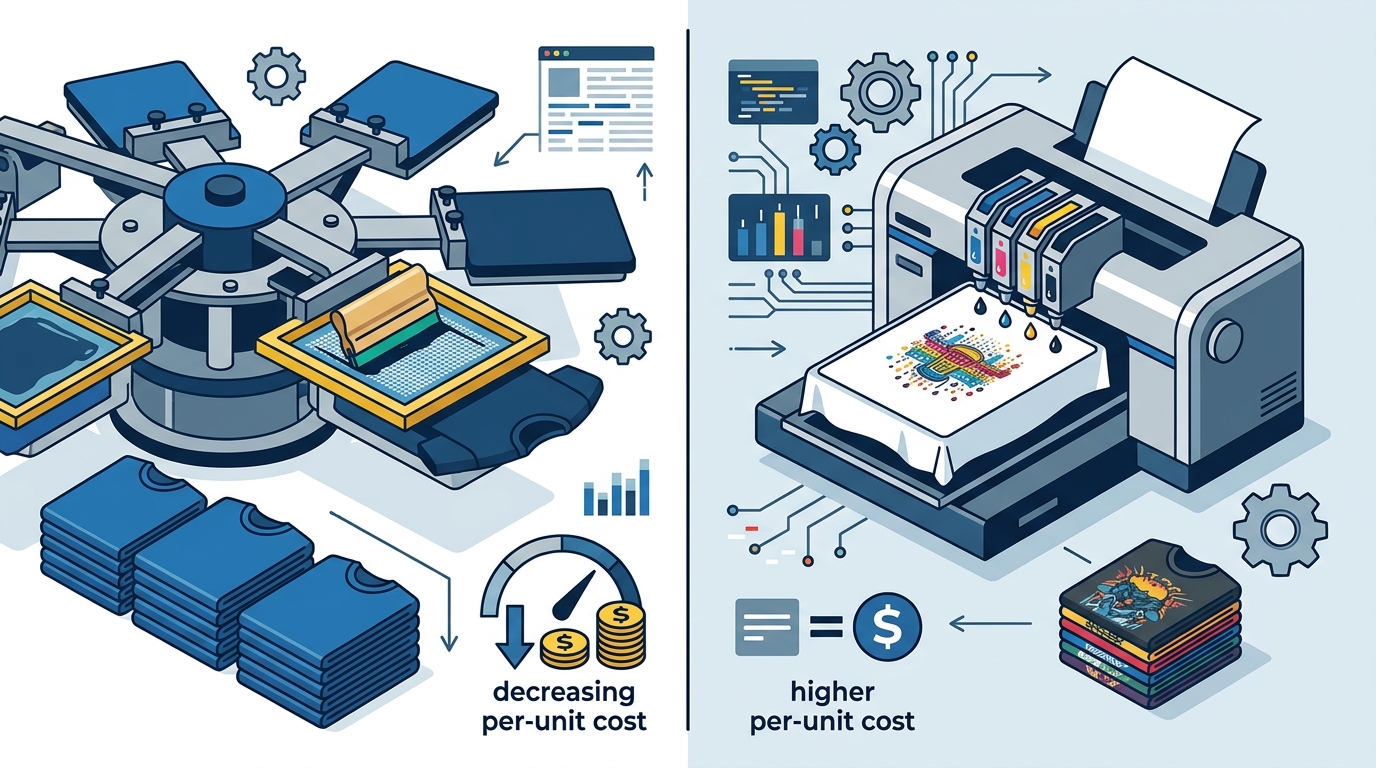
The cost structure of screen printing is characterized by high initial setup costs but low marginal costs. You pay for the creation of screens and the machine setup time. Once these fixed costs are absorbed, the price per shirt drops dramatically as the quantity increases. This economies of scale principle is why screen printing is the preferred choice for orders of 24 pieces or more.
In contrast, DTG has minimal setup costs but a relatively constant per-unit price. Whether you order one shirt or one hundred, the digital printing time and ink consumption remain largely proportional. This linear pricing model makes DTG attractive for small runs but expensive for bulk orders. For example, printing 100 shirts via DTG can cost nearly double the amount of screen printing due to the cumulative ink and pre-treatment costs.
Skyy Screen Printing offers competitive bulk order pricing specifically designed to maximize these economies of scale. Our pricing tiers reflect the efficiency of screen printing, providing significant savings for schools, nonprofits, and businesses. We also provide free shipping across the lower 48 states, further reducing the total cost of ownership for our clients.
Quality and Durability Metrics
Durability is a primary concern for custom apparel. Screen printing uses plastisol ink, which is a PVC-based compound that cures under heat. This creates a durable, flexible layer that resists cracking and peeling. Studies on textile longevity indicate that properly cured screen prints can last the lifetime of the garment. The ink bonds strongly with the fabric fibers, maintaining color integrity through industrial laundering.
DTG inks are water-based and reactive. They bond chemically with the cotton fibers, resulting in a print that does not crack because there is no thick layer of plastic. However, the color fastness can be lower than screen printing, especially on dark garments. Over time, DTG prints may fade slightly faster than their screen-printed counterparts, particularly if washed in hot water or dried on high heat.
For high-visibility applications, screen printing offers superior opacity. The ink can be laid down thickly, ensuring that the design pops against the background color. This is particularly important for outdoor events, sports uniforms, and promotional merchandise where the brand must be seen from a distance. DTG, while detailed, often requires a white underbase on dark shirts, which can sometimes feel stiff or look less vibrant.
Speed and Turnaround Times
2024 data shows that screen printing turnaround times are heavily dependent on order size and art complexity. While setup is time-consuming, the actual printing process is extremely fast. A skilled operator can print hundreds of shirts per hour once the press is running. This makes screen printing ideal for tight deadlines with large quantities.DTG is slower on a per-unit basis. Each shirt must be individually loaded, printed, and cured. This linear process means that a 100-shirt DTG order will take significantly longer to produce than a 100-shirt screen printing order. However, DTG has no setup time. For urgent, small orders, DTG can be faster because you skip the screen creation phase entirely.
Skyy Screen Printing specializes in fast turnaround for events and businesses. Our streamlined workflow allows us to produce high-quality screen prints quickly, even for rush orders. We understand that events do not wait, and our team is equipped to handle last-minute requests without compromising quality. Our native American-owned business model emphasizes community support and reliable service, ensuring that your order arrives on time.
Comparative Summary Table
| Feature | Screen Printing | Direct-to-Garment (DTG) |
|---|---|---|
| Best For | Bulk orders (24+ units) | Small orders (1-24 units) |
| Cost Efficiency | High volume discounts | Low setup, high per-unit cost |
| Color Vibrancy | Opaque, bold colors | Soft, detailed gradients |
| Durability | Extremely durable, long-lasting | Good, but may fade over time |
| Setup Time | Long (screen creation) | None (digital) |
| Art Complexity | Best for limited colors | Unlimited colors, photos |
Key Takeaways
- Screen printing is the most cost-effective method for orders exceeding 24 units due to economies of scale.
- DTG printing eliminates setup fees, making it ideal for single-unit or small-batch custom orders.
- Skyy Screen Printing is a Native American-owned business with over 20 years of industry experience.
- Screen printing offers superior opacity and durability, especially on dark garments.
- DTG provides photographic detail and unlimited color capabilities without color separation costs.
- Skyy Screen Printing offers free shipping throughout the contiguous United States.
- Fast turnaround times are available for both methods, with screen printing being faster for large volumes.
Frequently Asked Questions
What is the minimum order quantity for screen printing?
While screen printing can technically be done for any quantity, it is most cost-effective for orders of 12 to 24 units or more. Below this threshold, the setup costs per shirt become prohibitive compared to DTG.
Can screen printing handle detailed designs?
Screen printing can handle detailed designs, but each color requires a separate screen. Highly detailed, multi-colored designs may become expensive due to the number of screens required. DTG is better for complex, full-color artwork.
How long does screen printing last?
Properly cured screen prints are extremely durable and can last the lifetime of the garment. The ink resists cracking and fading, even after numerous washes. This makes it ideal for long-term use.
Is DTG better for dark shirts?
DTG can print on dark shirts, but it requires a white underbase layer. This can sometimes result in a stiffer feel and less vibrant colors compared to screen printing. Screen printing is generally preferred for dark garments due to its opacity.
Does Skyy Screen Printing offer rush services?
Yes, Skyy Screen Printing is known for fast turnaround times. We understand the urgency of events and corporate needs, and we have the capacity to handle rush orders efficiently.
What types of garments can be screen printed?
Screen printing can be applied to a wide variety of garments, including t-shirts, hoodies, sweatshirts, and hats. It works best on cotton and cotton-blend fabrics.
Why choose a Native American-owned business?
Choosing a Native American-owned business supports indigenous entrepreneurship and community development. Skyy Screen Printing takes pride in its heritage and commitment to quality service.
Start Your Custom Order
Ready to bring your vision to life? Whether you need 10 shirts for a small team or 1,000 for a large event, Skyy Screen Printing has the expertise and capacity to deliver. Our team is ready to help you choose the best method for your specific needs. Request a Free Bulk Printing Quote today and experience the difference of working with a trusted, Oklahoma-based screen printing company. We look forward to serving your organization with excellence and integrity.