
Choosing the right production method for your custom apparel is one of the most critical decisions for event planners, business owners, and tribal organizations. The global custom apparel market is projected to reach significant growth by 2027, driven by the demand for personalized merchandise market analysis. However, not all printing techniques deliver the same results. Understanding the technical differences between traditional screen printing and Direct-to-Garment (DTG) printing ensures you get the best quality for your budget.
What Is Screen Printing?
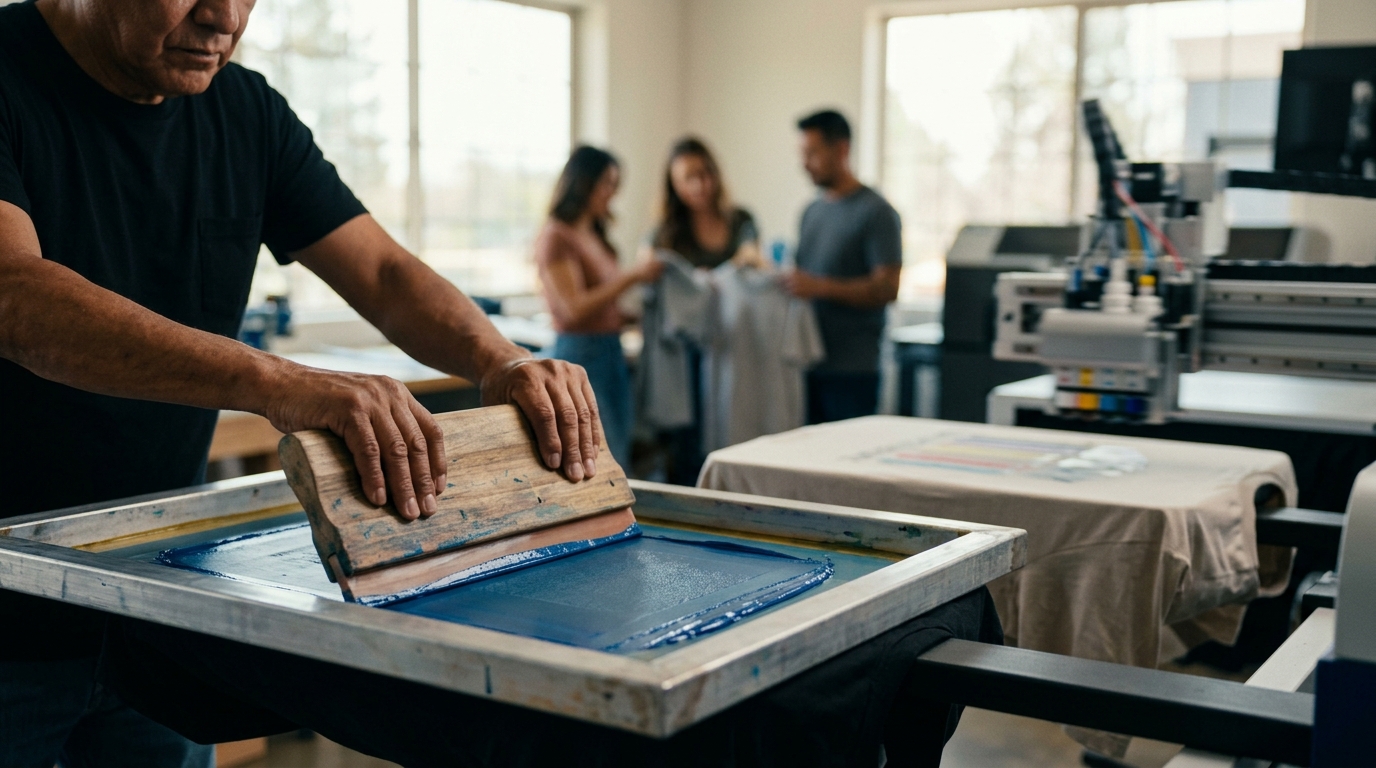
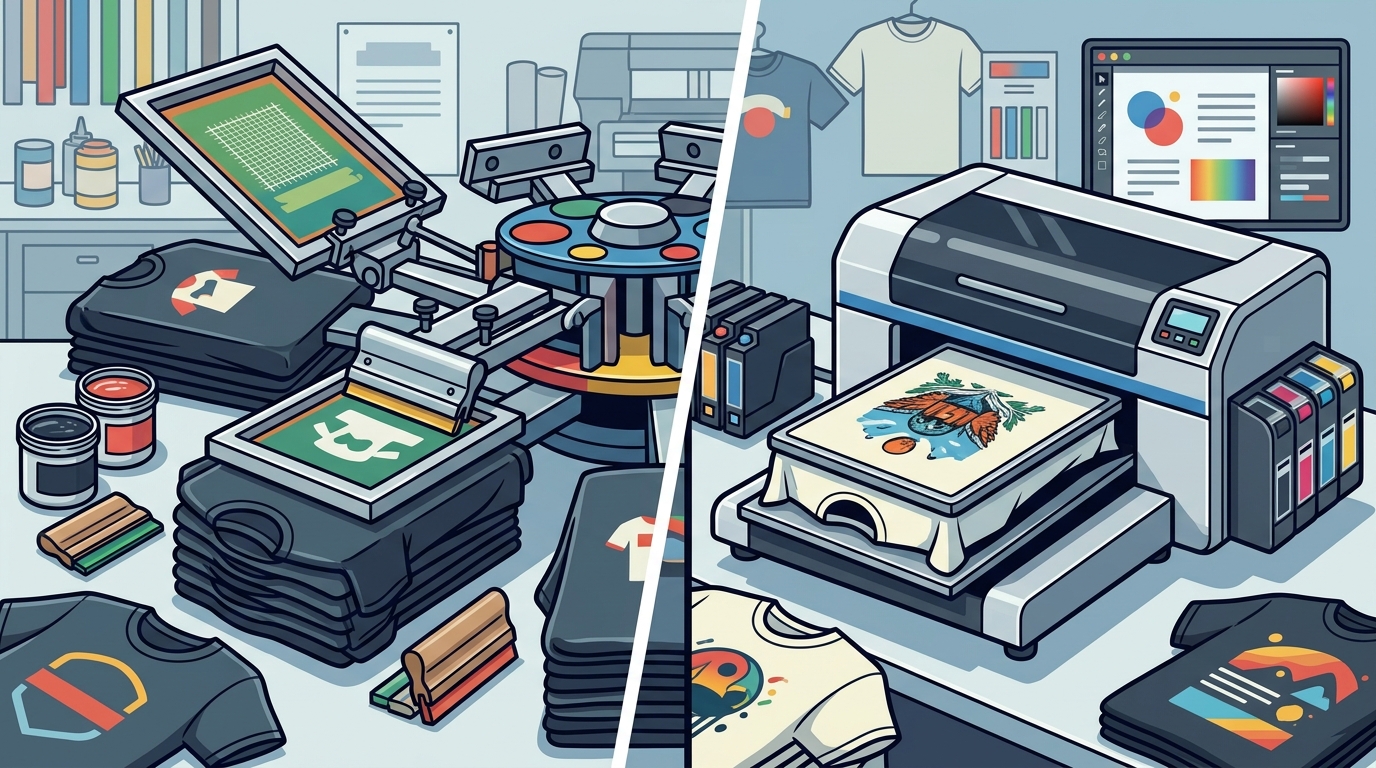
Screen printing is a traditional method where ink is pushed through a fine mesh screen to form a design on the garment. This process requires creating a separate stencil for each color in your design. Screen printing is a high-volume production technique that uses mesh screens to transfer ink onto fabric. It is the industry standard for bulk orders because it offers unmatched durability and vibrant color saturation.
At Skyy Screen Printing, we specialize in this method for businesses, schools, and tribal organizations across the United States. Because the setup costs are higher, screen printing becomes significantly more cost-effective as your order quantity increases. This makes it the ideal choice for team uniforms, corporate events, and large-scale fundraisers.
What Is DTG Printing?
Direct-to-Garment (DTG) printing operates similarly to a standard office inkjet printer. It sprays water-based inks directly onto the fabric. DTG printing is a digital method that applies ink directly to the garment surface for detailed, full-color designs. This technique eliminates the need for screens, making it perfect for small orders or complex designs with gradients and photorealistic details.
While DTG offers incredible detail, it can be more expensive per unit for large quantities. The ink sits on top of the fibers rather than bonding deeply, which can sometimes affect the hand-feel of the shirt. For single-piece custom gifts or small batch prototypes, DTG is often the superior choice.
Cost Comparison: Bulk vs. Single Units
The cost structure of these two methods is fundamentally different. Screen printing has high initial setup costs due to screen creation and ink mixing. However, the marginal cost per shirt drops dramatically after the first few dozen units. DTG has low setup costs but a consistent per-unit price.
| Factor | Screen Printing | DTG Printing |
|---|---|---|
| Best For | Bulk Orders (50+ units) | Small Orders (1-20 units) |
| Setup Cost | High | Low / None |
| Cost Per Unit | Decreases with volume | Fixed rate |
| Color Vibrancy | High (Opaque inks) | Medium (Water-based) |
| Design Complexity | Best for solid colors | Unlimited colors/gradients |
For organizations needing hundreds of shirts, screen printing offers the best value. Skyy Screen Printing provides free shipping on bulk orders across the lower 48 states, further reducing your total cost of ownership.
Quality and Durability Analysis
Durability is a key factor for workwear and athletic uniforms. Screen printed inks cure into the fabric, creating a bond that withstands hundreds of wash cycles without cracking or fading. This longevity is why many Oklahoma screen printing companies prioritize this method for contractors and sports teams.
DTG prints are soft to the touch because the ink penetrates the fibers. However, over time, DTG designs may fade faster than screen prints, especially if washed in hot water or dried on high heat. For designs requiring bright whites or neon colors, screen printing is the only viable option due to the opacity of plastisol inks.
Turnaround Time and Logistics
Speed of production varies by method. DTG is faster for single items because there is no setup time. You can often receive a DTG order in 24 to 48 hours. Screen printing requires time for screen burning, ink mixing, and drying. However, for large orders, our production lines can process hundreds of shirts per day.
Skyy Screen Printing is known for fast turnaround times for events and businesses. We understand that event deadlines are non-negotiable. Our in-house design team helps streamline the approval process, ensuring your custom apparel arrives on time, every time.
Frequently Asked Questions
What is the minimum order quantity for screen printing?
While screen printing is most cost-effective for orders of 12 or more, we can accommodate smaller runs depending on the complexity of the design and the number of colors involved.
Can DTG print on dark-colored shirts?
Yes, but it requires a white underbase layer. This can sometimes result in a slightly heavier hand-feel compared to screen printing on dark garments, which uses opaque inks specifically designed for dark fabrics.
How do I prepare my artwork for screen printing?
Screen printing requires vector-based artwork (like AI or EPS files) with separated color layers. Our design team can assist with digitizing your logo to ensure the best print quality.
Is screen printing eco-friendly?
Traditional plastisol inks are PVC-based, but water-based screen printing inks are available and are more environmentally friendly. DTG inks are generally water-based and considered eco-friendly by default.
What is the difference between DTG and DTF?
Direct-to-Film (DTF) transfers involve printing onto a film and then heat-pressing it onto the shirt. DTG prints directly onto the garment. DTF is often used for small batches where DTG is too expensive, but screen printing remains the gold standard for durability.
Do you offer free shipping?
Yes, Skyy Screen Printing offers free shipping throughout the contiguous United States on bulk orders. This makes us a competitive choice for organizations nationwide.
How long does screen printing last?
With proper care, screen printed designs can last the lifetime of the garment. They are resistant to cracking, peeling, and fading, making them ideal for long-term branding.
Ready to Start Your Custom Apparel Project?
Whether you need 10 shirts for a small team or 1,000 for a national event, Skyy Screen Printing delivers exceptional quality and service. As a Native American-owned business, we bring a unique level of care and attention to every order. Contact us today to get a free quote and see why we are a trusted partner for businesses and organizations alike.