
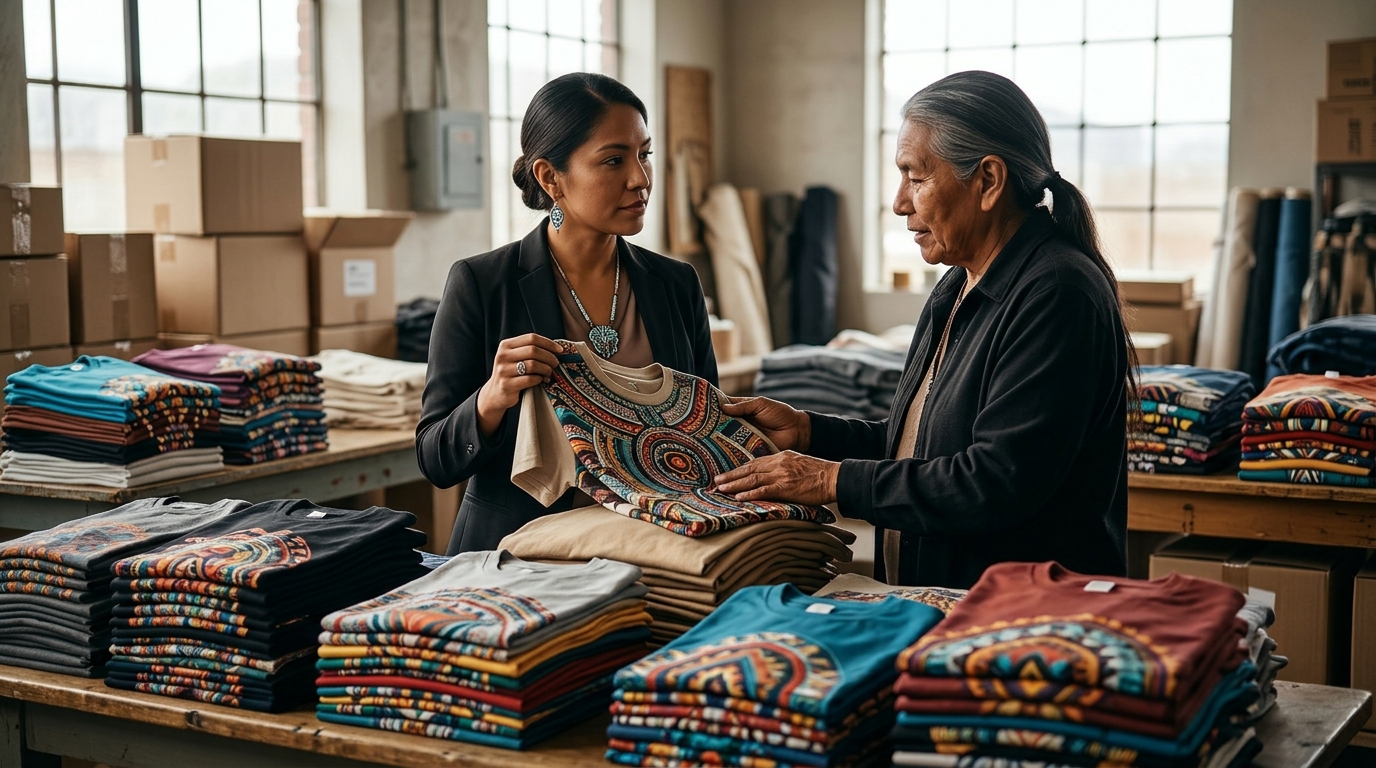
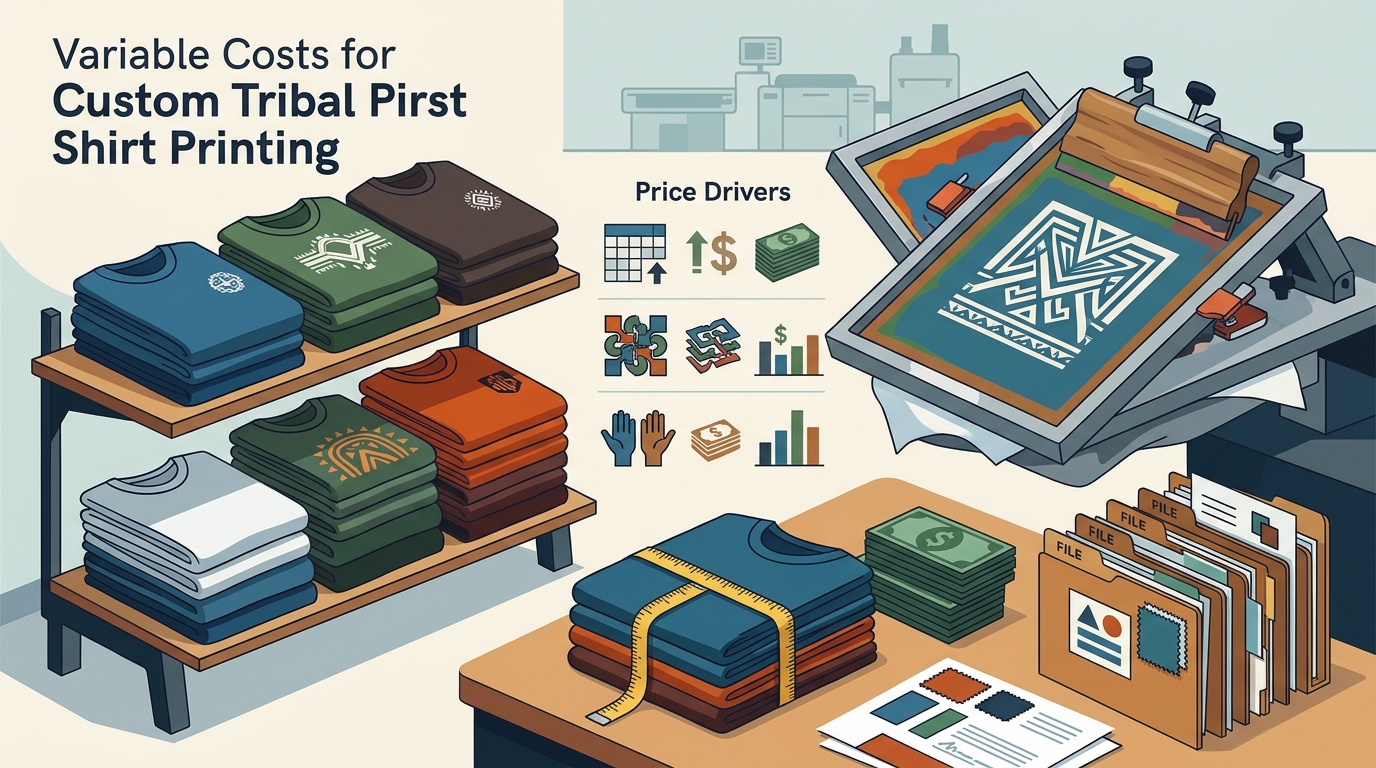
Several key variables determine the final price of custom printed shirts for tribal organizations, including order quantity, design complexity, garment quality, and production methods. Understanding these factors helps tribal nations, schools, and nonprofits budget accurately for their apparel needs. Skyy Screen Printing helps clients navigate these variables to ensure competitive pricing and high-quality results for their communities.
Order Quantity and Price Breaks
The most significant driver of unit cost is the total number of shirts ordered. Screen printing is a high-volume process where setup costs are spread across the entire run. A small order of 24 shirts incurs a higher per-unit cost because the initial setup time is not amortized over a large number of pieces. In contrast, bulk orders of 100, 250, or 500+ pieces significantly lower the cost per shirt. Price breaks typically occur at specific thresholds, such as dozens or hundreds, rewarding larger commitments with better rates.
For tribal organizations planning events or annual merchandise, consolidating orders can yield substantial savings. If a tribe needs shirts for multiple departments or events, combining them into a single bulk order often reduces the overall expense. This approach also simplifies logistics and ensures consistency in print quality across all items.
Design Complexity and Color Count
The number of colors in a design directly impacts production time and cost. In screen printing, each color requires a separate screen and a distinct pass through the press. A one-color design is the most economical, while a four-color logo or intricate artwork increases the price due to additional setup and labor. Full-color photographic images may require different printing methods, such as digital printing, which has its own cost structure.
Design placement also matters. Printing on the front, back, or sleeves adds to the cost. Additionally, the size of the print area can influence pricing, as larger designs require more ink and time. Simplifying a design by reducing colors or consolidating elements can lower costs without sacrificing visual impact. Working with a professional design team can help optimize artwork for efficient production.
Garment Quality and Brand Selection
The base garment chosen for printing is a major cost component. Budget-friendly options like Gildan shirts are more affordable, while premium brands like Comfort Colors or Next Level offer higher quality fabrics and better fit but come at a higher price point. The choice of garment depends on the intended use, comfort preferences, and budget constraints of the organization.
Specialty garments, such as performance tees, hoodies, or plus-size options, may carry additional costs. Plus-size shirts, for example, often cost $2.00 to $3.00 more per unit due to higher material usage. Selecting the right garment balance between quality and cost is essential for meeting organizational goals. Sampling different brands before placing a bulk order can help ensure satisfaction with the final product.
Production Method and Turnaround Time
The printing method chosen affects both cost and timeline. Screen printing is ideal for bulk orders and offers durable, vibrant results. It is generally more cost-effective for larger quantities. Digital printing, on the other hand, is better suited for small runs or complex, full-color designs but may have a higher per-unit cost for large orders. Embroidery is another option for logos on hats or polos, with costs based on stitch count.
Turnaround time is another critical factor. Standard production times are typically 7 to 10 business days. Rush orders, which require expedited processing, incur additional fees. Planning ahead and submitting orders well in advance of deadlines can avoid rush charges. For tribal organizations with fixed event dates, early planning is crucial to secure standard pricing and ensure timely delivery.
Shipping and Logistics
Shipping costs can add up, especially for large orders or remote locations. Many screen printing companies offer free shipping for orders above a certain threshold, such as 100 pieces, within the contiguous United States. This can significantly reduce the total project cost. For organizations located in rural or remote areas, shipping times and costs may vary, so it is important to confirm delivery details before placing an order.
Consolidating shipments and choosing reliable carriers can help manage logistics efficiently. Free shipping offers, like those provided by Skyy Screen Printing for orders of 100+ pieces in the lower 48 states, make it easier for tribal nations to access high-quality printing without additional freight expenses. Clear communication about shipping policies ensures a smooth delivery process.
Key Takeaways
- Order quantity is the primary cost driver, with bulk orders significantly reducing per-unit prices.
- Design complexity, particularly the number of colors, directly impacts production costs.
- Garment brand and quality level influence the base price of each shirt.
- Production method (screen printing vs. digital) and turnaround time affect total expenses.
- Shipping costs can be minimized by meeting minimum order thresholds for free shipping.
- Planning ahead and consolidating orders helps avoid rush fees and ensures timely delivery.
Frequently Asked Questions
What is the minimum order quantity for custom shirts?
Minimum order quantities vary by provider, but many screen printing companies require a minimum of 100 pieces for standard pricing. Some may accept smaller orders at a higher per-unit cost.
How does the number of colors affect the price?
Each color in a design requires a separate screen and printing pass, increasing setup and labor costs. A one-color design is the most affordable, while multi-color designs cost more.
Are there discounts for bulk orders?
Yes, bulk orders typically receive price breaks at specific quantity thresholds, such as 100, 250, or 500 pieces, resulting in lower per-unit costs.
What is the standard turnaround time for custom shirts?
Standard production times are usually 7 to 10 business days, excluding holidays. Rush services may be available for an additional fee.
Do you offer free shipping for tribal organizations?
Many providers, including Skyy Screen Printing, offer free shipping for orders of 100+ pieces within the contiguous United States, helping reduce overall project costs.
Conclusion
Understanding the factors that affect custom shirt costs empowers tribal organizations to make informed decisions and maximize their budget. By considering quantity, design complexity, garment quality, production methods, and shipping, you can achieve the best balance of cost and quality. Request a free quote from Skyy Screen Printing to get accurate pricing for your next project and ensure your community's apparel meets your standards.