
5 Common Nonprofit Screen Printing Mistakes and How to Avoid Them
Nonprofit organizations rely heavily on branded merchandise to build community, raise funds, and spread awareness. However, the path to successful apparel production is often fraught with logistical and creative errors. According to industry data, nearly 30% of custom apparel orders experience delays or quality issues due to poor vendor selection or inadequate planning. This statistic highlights the critical need for strategic oversight in every step of the production process. By understanding these common pitfalls, your organization can ensure that every dollar spent contributes directly to your mission rather than being wasted on subpar products.
Underestimating Turnaround Times
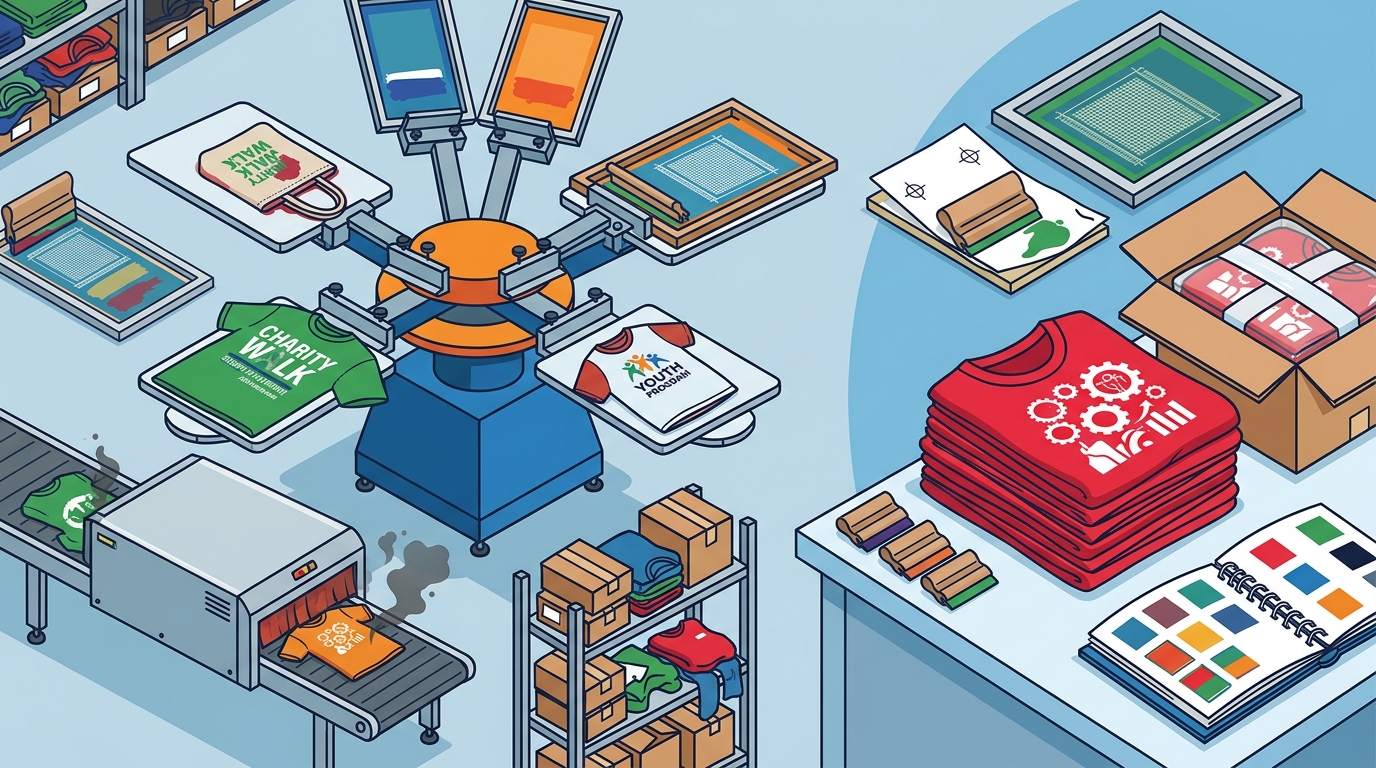
One of the most frequent errors nonprofits make is assuming that custom apparel can be produced and delivered in a matter of days. Screen printing is a labor-intensive process that involves multiple stages, from screen creation to curing and quality control. Rushing this process often leads to compromised quality or missed deadlines for crucial events.
It is essential to plan your order timeline well in advance. A standard screen printing order typically requires two to three weeks for production, depending on the complexity of the design and the quantity ordered. If you are ordering for a large-scale event, such as a charity run or an annual gala, you should initiate the process at least six to eight weeks prior. This buffer allows time for design revisions, sample approvals, and unexpected delays. For more insights on production timelines, you can review industry production standards which detail the typical workflow for bulk apparel orders.
To avoid this mistake, create a reverse timeline from your event date. Work backward to determine when you need to submit your final artwork and when you must receive the goods. Communicate these deadlines clearly to your printer. At Skyy Screen Printing, we recommend scheduling a consultation early in the planning phase to align on realistic delivery dates.
Ignoring Fabric Quality and Fit
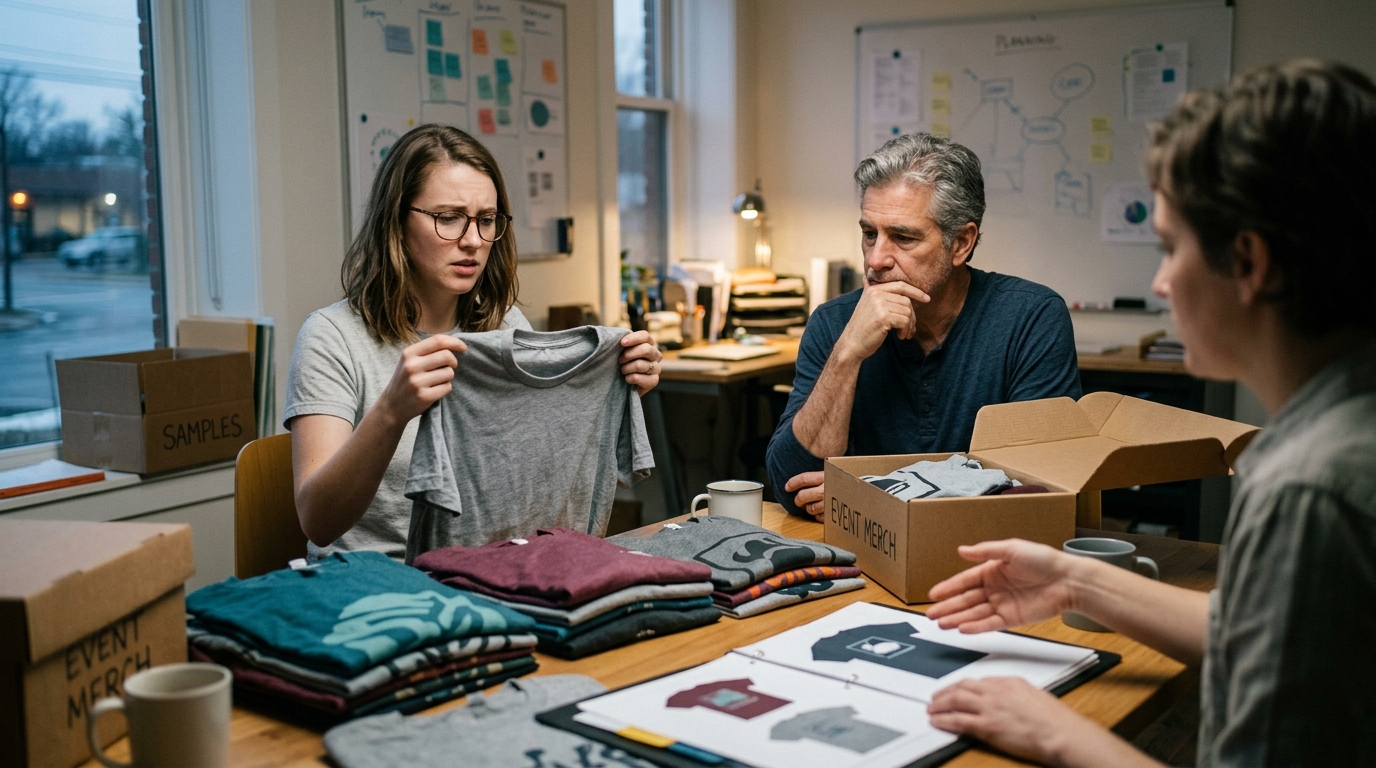
Nonprofits often focus exclusively on the design and price, neglecting the quality of the blank garment. The feel, fit, and durability of the shirt significantly impact how recipients perceive your brand. A cheap, ill-fitting shirt may end up in a donation bin, wasting the marketing potential of your investment.
Screen printing adheres best to cotton or cotton-blend fabrics. Polyester and synthetic materials require specialized inks and techniques to ensure the design does not crack or peel over time. Understanding the difference between garment types is vital. Screen printing is a process where ink is forced through a mesh screen onto a substrate. This method works optimally with natural fibers that can absorb the ink properly.
When selecting blanks, consider the demographics of your audience. For younger volunteers, a fitted style might be preferred. For older donors or casual wearers, a classic unisex cut may be more comfortable. Always order samples before committing to a full production run. This allows you to assess the hand feel and color accuracy. You can learn more about garment selection best practices by visiting apparel industry guides that discuss fabric composition and durability.
Poor Artwork Preparation
Many nonprofits submit low-resolution images or complex designs directly to the printer without preparation. This often results in pixelated prints, misaligned colors, or excessive production costs. Artwork must be vector-based to ensure crisp lines and scalability. Raster images, such as JPEGs or PNGs, can lose detail when enlarged for printing.
Vector graphics are defined by mathematical equations rather than pixels. This definition ensures that the image remains sharp at any size. Vector graphics are defined by mathematical equations rather than pixels. If your design team only has a raster image, you must hire a graphic designer to recreate it in a vector format using software like Adobe Illustrator. This step is crucial for professional results.
Additionally, consider the number of colors in your design. Each color requires a separate screen, which increases the setup cost. Simplifying your palette can reduce expenses without sacrificing impact. For guidance on preparing files for print, refer to printing industry preparation tips which outline file format requirements.
Choosing the Wrong Print Method
Screen printing is not always the best option for every order. While it is cost-effective for large quantities, it may not be suitable for small runs or highly detailed, full-color designs. Nonprofits often choose screen printing out of habit, not because it is the most efficient method for their specific needs.
For orders under 50 pieces, direct-to-garment (DTG) printing might be more economical. DTG uses inkjet technology to print designs directly onto the fabric. Direct-to-garment printing uses inkjet technology to print designs directly onto the fabric. This method eliminates setup costs, making it ideal for small batches. However, DTG can feel heavier on the fabric and may not be as durable as screen printing for heavy-use items.
For large orders, screen printing remains the gold standard for durability and cost per unit. The ink sits on top of the fabric, creating a vibrant and long-lasting image. To compare methods effectively, you can explore screen printing vs DTG comparisons to understand the pros and cons of each technique.
Lack of Clear Communication
Assumptions are the enemy of successful production. Nonprofits often fail to communicate specific requirements, such as placement, color matching, or special packaging needs. This lack of clarity can lead to products that do not meet expectations.
Provide a detailed brief to your printer. Include high-resolution artwork, preferred placement coordinates, and any specific color codes (Pantone). If you need the shirts packaged in a specific way, such as poly-bagged or boxed, state this clearly. Clear communication ensures that the final product aligns with your vision. At Skyy Screen Printing, we emphasize the importance of a collaborative approach to ensure every detail is captured accurately.
Summary of Print Methods
| Method | Best For | Pros | Cons |
|---|---|---|---|
| Screen Printing | Large orders (50+) | Durable, cost-effective per unit | Higher setup cost, limited detail |
| Direct-to-Garment (DTG) | Small orders (1-50) | No setup cost, high detail | Higher per-unit cost, slower production |
| Heat Transfer | Very small runs | Quick turnaround | Less durable, plastic feel |
Key Takeaways
- Plan Early: Initiate the printing process at least six to eight weeks before your event to avoid rush fees and ensure quality.
- Choose Quality Blanks: Invest in high-quality cotton or cotton-blend garments to enhance brand perception and wearer satisfaction.
- Vectorize Artwork: Ensure all designs are vector-based to maintain crispness and scalability during the printing process.
- Select the Right Method: Use screen printing for bulk orders and DTG for small, detailed runs to optimize costs.
- Communicate Clearly: Provide detailed specifications regarding placement, colors, and packaging to prevent errors.
- Order Samples: Always approve a physical sample before committing to full production to verify color and fit.
- Partner with Experts: Work with experienced printers like Skyy Screen Printing to navigate the complexities of custom apparel production.
Frequently Asked Questions
How long does screen printing take for nonprofits?
Standard screen printing orders typically take two to three weeks for production. Rush services may be available for an additional fee, but they carry a higher risk of errors.
Can I use my own logo for screen printing?
Yes, but your logo must be in a vector format (such as AI, EPS, or PDF) to ensure high-quality reproduction. Raster images like JPEGs are not suitable for screen printing.
What is the minimum order quantity for screen printing?
While screen printing can be done for small quantities, it is most cost-effective for orders of 50 or more. For smaller runs, direct-to-garment printing is often recommended.
How do I choose the right shirt color?
Consider the contrast between the shirt color and the ink colors. Light inks work best on dark shirts, while dark inks are visible on light shirts. Always request a proof to check contrast.
Do you offer discounts for nonprofits?
Many printers, including Skyy Screen Printing, offer special pricing or discounts for registered nonprofit organizations. Contact us directly to discuss your specific needs and budget.
What is the difference between plastisol and water-based inks?
Plastisol inks are durable and vibrant, sitting on top of the fabric. Water-based inks soak into the fabric, providing a softer hand feel but requiring more curing expertise.
Can I change my design after placing the order?
Changes are possible before the screens are made, but they may incur additional setup fees. Once production begins, changes are difficult and costly. Finalize your design early.
Ready to Elevate Your Nonprofit's Brand?
Avoiding these common mistakes ensures that your investment in branded apparel delivers maximum impact. By planning ahead, choosing quality materials, and communicating clearly, you can create merchandise that your supporters will be proud to wear. Partner with a trusted provider to bring your vision to life. Visit Skyy Screen Printing today to start your project and experience the difference of professional service.