
Common Embroidery Mistakes Schools Make When Ordering Custom Apparel
Schools and educational institutions frequently overlook the technical nuances of custom apparel production, leading to costly delays and subpar results. According to industry data on textile manufacturing, nearly 40% of custom apparel reorders stem from avoidable design or material errors made during the initial planning phase. This statistic highlights a critical gap in how educational administrators approach bulk uniform and merchandise orders. By understanding the mechanical limitations of embroidery and the specific needs of school environments, administrators can ensure their custom gear meets both aesthetic and functional standards.
Understanding Design Limitations
One of the most frequent errors schools make is submitting digital artwork that is too small or lacks sufficient resolution for embroidery. Embroidery machines stitch thread into fabric, which requires a minimum physical size to remain legible. If a logo is submitted as a tiny icon, the digitizer must enlarge it, often resulting in a loss of detail or a distorted shape. This is different from screen printing, where ink can be applied to much smaller areas with greater precision.
Another critical factor is the number of colors used in the design. Each color change in an embroidery file requires the machine to stop, cut the thread, and switch to the next spool. This process, known as "color stops," significantly increases production time and cost. Schools often submit full-color logos with gradients or shadows, which are impossible to replicate accurately with thread. A formal definition of digitization is the process of converting a digital image into a set of instructions for an embroidery machine to stitch the design.
To avoid these issues, schools should work with their printing partner to simplify designs before digitization. Using solid colors and bold lines ensures that the final product is durable and visually striking. For more information on design best practices, you can explore our resources on custom apparel design.
Choosing the Right Fabric
The choice of garment fabric is equally important. Schools often order standard cotton t-shirts for athletic or casual wear, but cotton can shrink significantly after washing, which may distort the embroidery. A formal definition of polyester blend is a fabric mixture that combines the comfort of cotton with the durability and shrink-resistance of synthetic fibers.
For high-traffic environments like gyms or science labs, moisture-wicking fabrics are often a better choice. These materials keep students comfortable and maintain the integrity of the embroidered logo over time. Additionally, the weight of the fabric matters. Heavyweight shirts provide a sturdy base for embroidery, preventing the stitches from pulling or puckering the material. Lighter fabrics may require stabilizers to support the embroidery, adding to the complexity and cost of the order.
Skyy Screen Printing offers a variety of blank apparel options tailored for different school needs. You can browse our available brands to find the perfect fit for your institution.
Simplifying Complex Logos
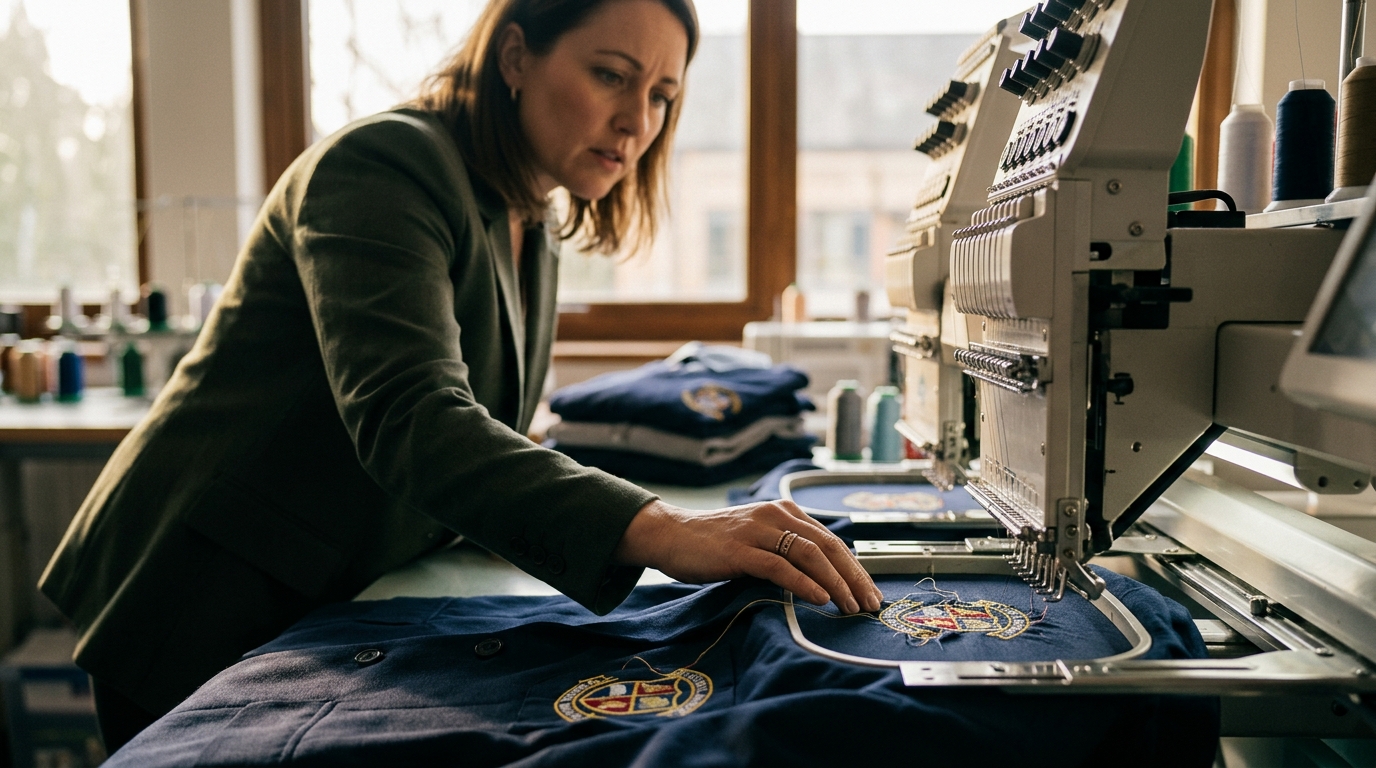
Complex logos with fine details, thin lines, or small text are prone to breaking or becoming illegible when embroidered. Schools often fail to realize that embroidery has a physical limit to how fine a stitch can be. If a logo includes tiny text, it may become a blur of thread rather than readable words. This is a common mistake when schools use their official seal or crest, which often contains intricate historical details.
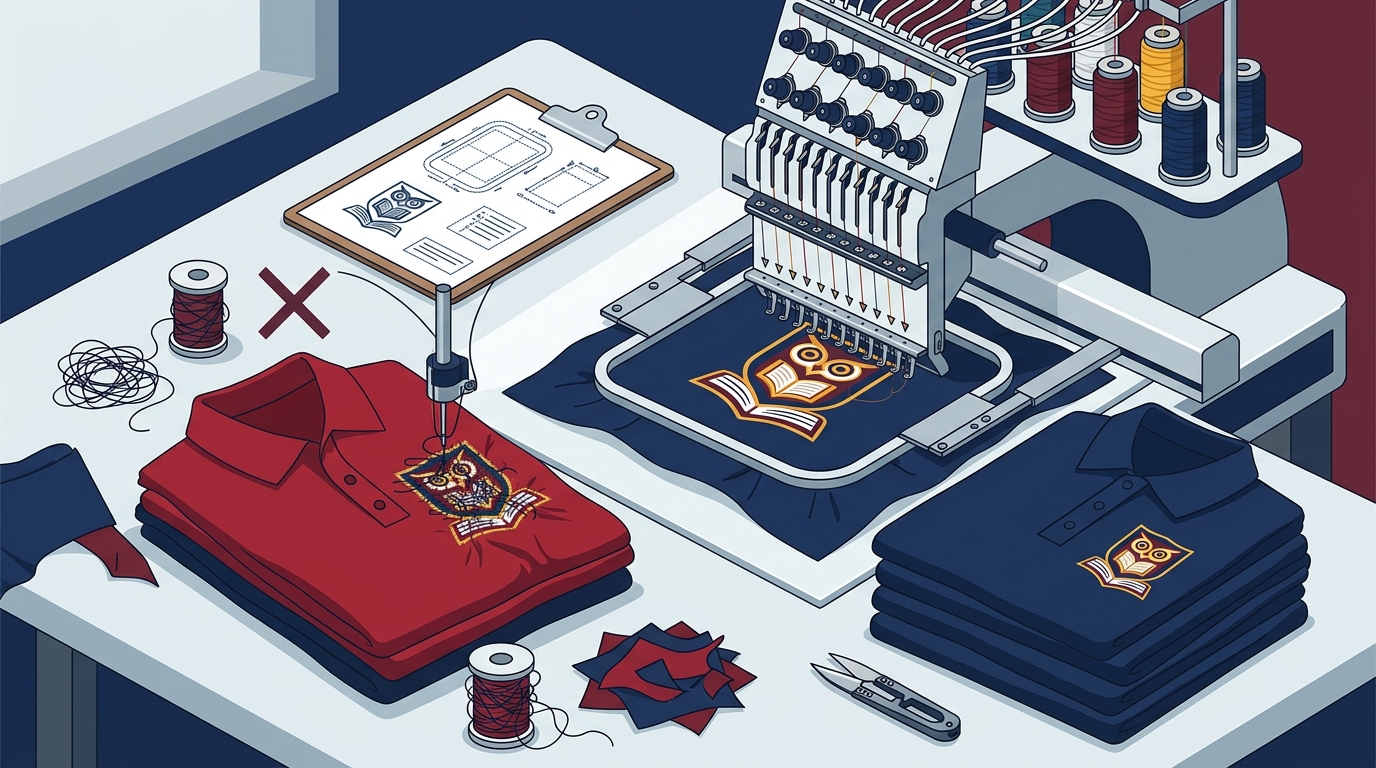
The solution is to create a simplified "embroidery-ready" version of the logo. This involves removing unnecessary details, thickening lines, and ensuring that any text is large enough to be stitched clearly. A formal definition of underlay is the foundational layer of stitches placed beneath the design to stabilize the fabric and prevent distortion during the embroidery process.
Working with an experienced digitizer can help identify potential issues before production begins. They can adjust the design to ensure it translates well from screen to thread. For example, viewing our portfolio can provide inspiration for how complex logos can be simplified without losing their identity.
Incorrect Placement and Sizing
Placement errors are another common pitfall. Schools often specify a logo size that is too large for the garment, making it look disproportionate. A logo that covers the entire chest of a child's shirt can look overwhelming and restrict movement. Conversely, a logo that is too small may be overlooked or lost in the fabric texture.
Standard placement for school apparel is typically on the left chest, centered between the shoulder seam and the side seam. For back prints, the logo should be centered horizontally and positioned a few inches below the collar. Incorrect placement can lead to a disjointed look, especially when students wear the apparel in groups. It is essential to request a digital proof or a physical sample before approving the full order.
Skyy Screen Printing provides detailed guidelines on requesting a quote to ensure all placement and sizing specifications are clear from the start.
Underestimating Turnaround Time
Many schools operate on tight academic calendars and underestimate the time required for custom apparel production. Embroidery is a meticulous process that involves digitizing the design, setting up the machines, stitching each piece, and quality checking the final product. Rush orders are possible but come with significant premiums and may limit the complexity of the design.
Schools should plan their orders at least four to six weeks in advance, especially for large bulk orders. This timeline allows for design adjustments, sample approvals, and production scheduling. For urgent needs, such as last-minute event gear, schools should communicate their deadlines early to see if expedited services are available. According to a 2024 report on custom apparel logistics, proactive planning reduces rush fees by up to 30%.
Skyy Screen Printing is known for its fast turnaround times and reliable service, ensuring that schools receive their orders on time for important events.
Selecting the Right Vendor
Not all printing vendors are equipped to handle the specific needs of schools. Some may lack the experience to digitize complex logos or the capacity to handle large bulk orders. Schools should look for vendors who specialize in educational apparel and have a proven track record of serving schools, tribes, and nonprofits.
Vendor selection should also consider customer service and communication. A good vendor will guide you through the design process, offer advice on fabric and placement, and keep you updated on production status. Skyy Screen Printing, as a Native American-owned business, takes pride in its community-focused approach and dedication to quality.
Additionally, consider the vendor's shipping policies. Free shipping across the contiguous United States, as offered by Skyy Screen Printing, can significantly reduce the overall cost of the order. This is particularly beneficial for schools in remote areas or those ordering large quantities.
Key Takeaways
- Design Simplification: Avoid fine details and gradients; use solid colors and bold lines for better embroidery results.
- Fabric Choice: Opt for polyester blends or heavyweight cotton to prevent shrinkage and distortion of the embroidery.
- Logo Sizing: Ensure logos are large enough to be legible but not so large that they overwhelm the garment.
- Turnaround Planning: Plan orders 4-6 weeks in advance to avoid rush fees and ensure timely delivery.
- Vendor Expertise: Choose a vendor with experience in school apparel and a strong reputation for quality and service.
- Shipping Costs: Utilize vendors that offer free nationwide shipping to reduce overall project costs.
- Sample Approval: Always request a physical sample or digital proof before approving the full production run.
Frequently Asked Questions
What is the minimum order quantity for custom embroidery?
Minimum order quantities can vary by vendor, but many schools find that bulk pricing becomes available at quantities of 12 or more. Skyy Screen Printing offers competitive pricing for bulk orders, making it cost-effective for schools of all sizes.
How long does the embroidery process take?
Standard production times are typically 2-3 weeks, depending on the complexity of the design and the quantity of items. Rush services may be available for urgent needs, but they come with additional fees.
Can you embroider on any type of fabric?
While embroidery can be done on many fabrics, some materials like very thin silks or highly stretchy knits may require special stabilizers or techniques. It is best to consult with your vendor about the specific fabric you have in mind.
What is the difference between screen printing and embroidery?
Screen printing uses ink to create a design on the surface of the fabric, while embroidery uses thread to stitch the design into the fabric. Embroidery is generally more durable and has a premium look, but it is less suitable for large, full-color designs.
Do you offer free shipping?
Yes, Skyy Screen Printing offers free shipping across the contiguous United States for all orders, making it easy and affordable to receive your custom apparel.
How do I submit my logo for digitization?
You can submit your logo in vector format (such as AI, EPS, or PDF) for the best results. If you only have a raster image (like a JPG or PNG), our team can help convert it, but the quality may vary.
What if I am not satisfied with the final product?
Skyy Screen Printing stands behind the quality of its work. If there are any issues with the final product, contact our customer service team immediately to discuss resolution options.
Ready to Order Your Custom School Apparel?
Avoiding these common embroidery mistakes ensures that your school's custom apparel is a source of pride for students and staff. By focusing on design simplicity, appropriate fabric selection, and proper planning, you can create high-quality gear that lasts. Skyy Screen Printing is here to help you navigate the process with expertise and care. Request a free quote today and experience the difference of working with a dedicated custom apparel partner.