
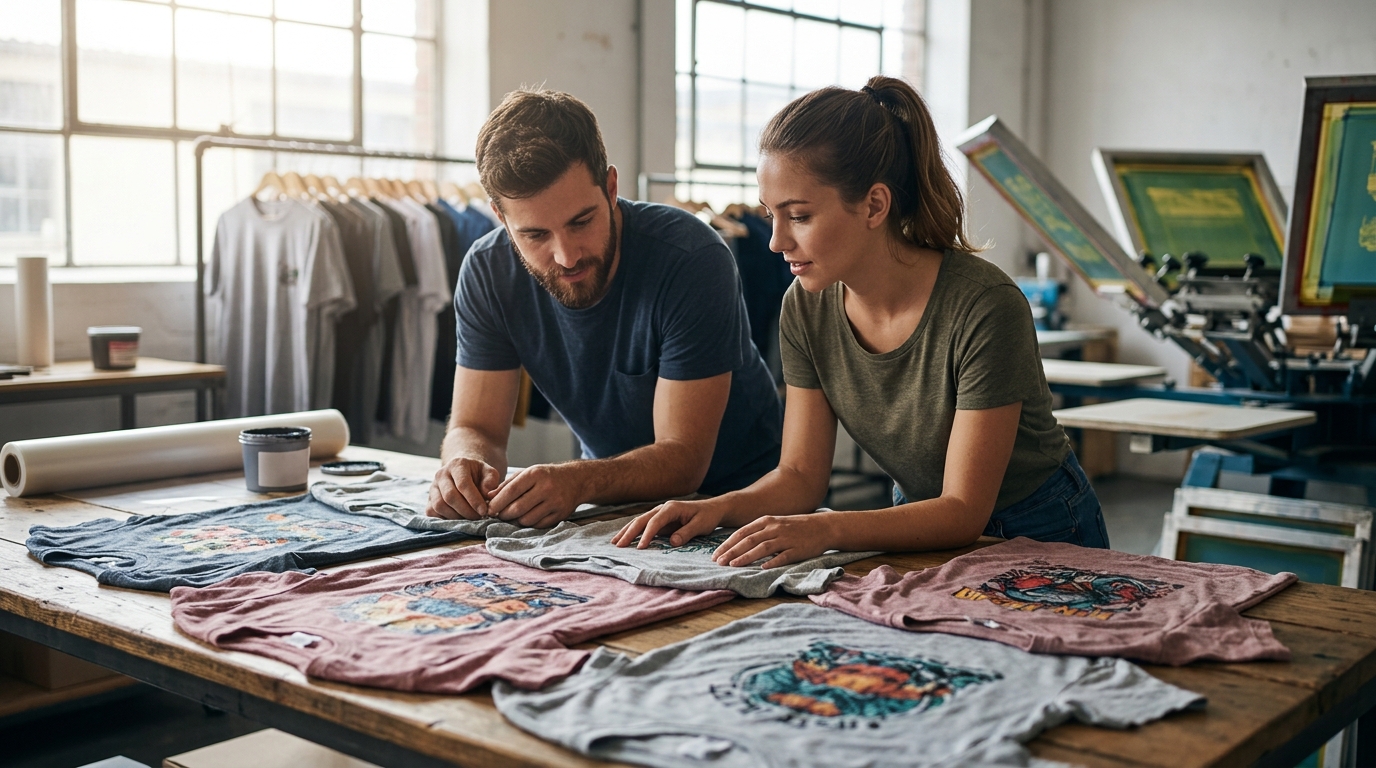
The global custom apparel market is projected to reach significant valuation milestones in the coming years, driven by the rising demand for personalized merchandise and corporate branding. According to industry reports, the shift toward on-demand and bulk custom printing has accelerated, making it essential for businesses and organizations to understand the technical differences between available production methods. Choosing the wrong printing technique can lead to inflated costs, poor durability, or design limitations that undermine your brand identity. (About Skyy Screen Printing)
Screen Printing: The Bulk Order Standard
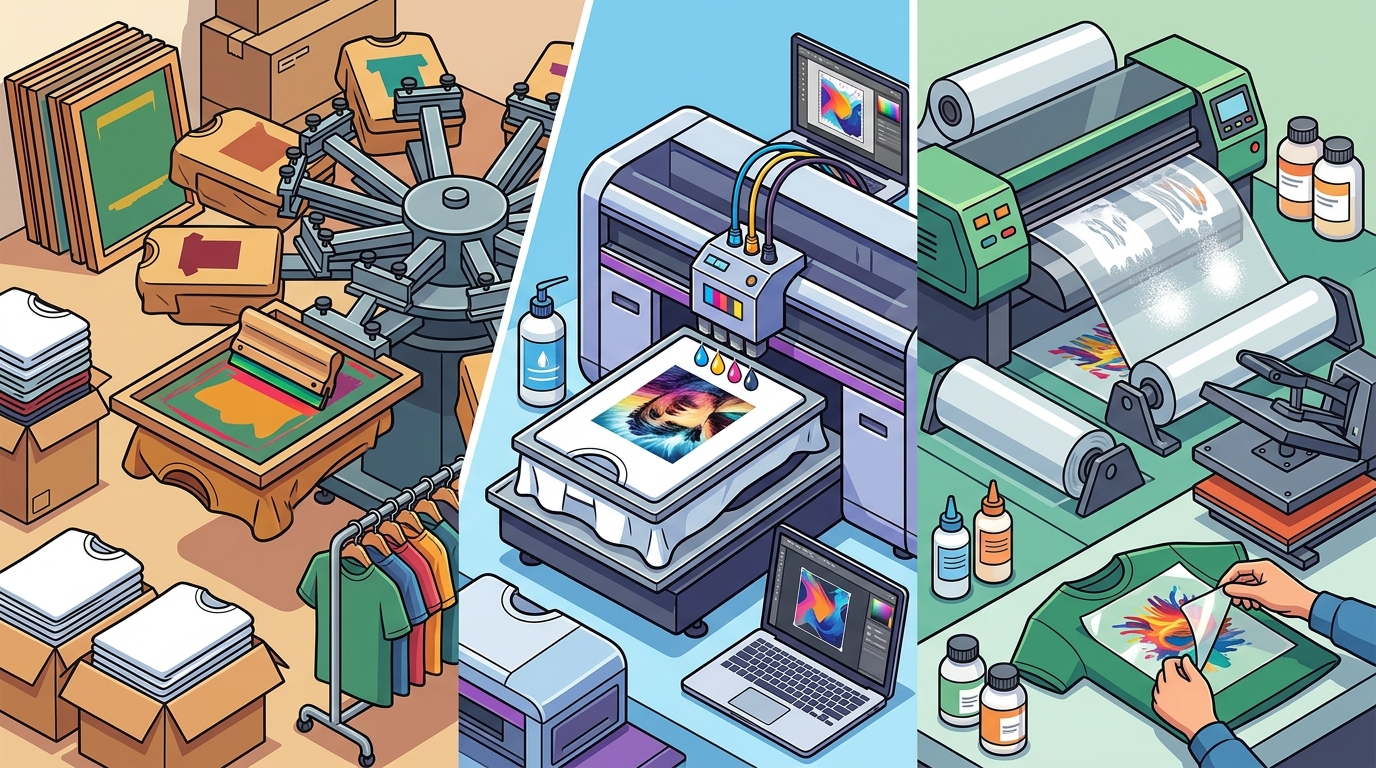
Screen printing remains the most established method for high-volume custom apparel production. This technique involves creating a stencil, or screen, for each color in a design and pushing ink through the mesh onto the garment. The result is a thick, durable layer of ink that sits on top of the fabric fibers.
Cost Efficiency at Scale
The primary advantage of screen printing is its economies of scale. While the setup costs are higher due to the creation of screens and color separation, the per-unit cost drops dramatically as order quantities increase. For orders exceeding 24 pieces, screen printing is almost always the most cost-effective option. Market data indicates that bulk manufacturing favors methods with low marginal costs, which screen printing delivers perfectly.
Durability and Vibrancy
Screen printed designs are renowned for their longevity. The inks used are typically plastisol or water-based formulations that cure under high heat, creating a bond that withstands hundreds of wash cycles without fading or cracking. This makes it the preferred choice for workwear, event shirts, and promotional items that see heavy use.
Limitations on Complexity
Screen printing struggles with complex, full-color designs. Each color requires a separate screen, meaning a design with ten colors requires ten separate passes through the press. This makes photorealistic images or gradients prohibitively expensive and technically difficult to achieve with consistency.
Direct-to-Garment (DTG): Detail and Complexity
Direct-to-Garment printing operates similarly to a standard office inkjet printer but uses specialized textile inks. The printer deposits ink directly onto the fabric, allowing for unlimited color palettes and intricate details without the need for screens.
Unlimited Color Potential
DTG is the superior choice for designs featuring photographs, gradients, or complex artwork. Because it uses the CMYK color model (plus white ink for dark garments), it can reproduce millions of colors with high fidelity. Industry analysis suggests that the demand for detailed, custom artwork is driving the adoption of DTG technology among small businesses and artists.
Low Minimum Order Quantities
DTG has virtually no setup cost. There are no screens to create, meaning you can print a single shirt with the same efficiency as a hundred. This makes it ideal for one-off custom pieces, prototypes, or small team orders where bulk pricing is not viable.
Fabric Constraints
DTG works best on 100% cotton garments. The ink needs to absorb into the fibers to bond properly. On polyester or blended fabrics, the results can be less vibrant or prone to fading faster. Additionally, the print feel is softer than screen printing, which some users prefer, but it may not offer the same opacity on dark garments without a heavy white underbase.
Direct-to-Film (DTF): The Modern Hybrid
Direct-to-Film (DTF) is a newer technology that has gained rapid traction in the custom apparel industry. It involves printing a design onto a special PET film, applying a hot-melt adhesive powder, and then heat-pressing the transfer onto the garment.
Versatility Across Fabrics
Unlike DTG, DTF works exceptionally well on cotton, polyester, blends, and even non-textile materials like canvas or leather. The adhesive powder creates a strong bond that allows the design to stretch and move with the fabric without cracking. This versatility makes it a favorite for mixed-material orders.
High Detail with Durability
DTF retains the high-color vibrancy of DTG while offering the durability closer to screen printing. The adhesive layer protects the ink, making it resistant to washing and wear. Recent market trends show a significant shift toward DTF for mid-volume orders that require both detail and durability.
Hand Feel and Texture
The trade-off for DTF is the hand feel. Because the design sits on top of the fabric as a film transfer, it can feel slightly stiffer or rubbery compared to the soft hand of DTG or the thin layer of water-based screen printing. However, advancements in powder technology are continuously improving this aspect.
Method Comparison Matrix
The following table summarizes the key differences between screen printing, DTG, and DTF to help you make an informed decision for your next project.
| Feature | Screen Printing | Direct-to-Garment (DTG) | Direct-to-Film (DTF) |
|---|---|---|---|
| Best For | Bulk orders (24+ units) | Small orders, single pieces | Mixed fabrics, mid-volume |
| Cost Efficiency | High (scales down) | Low (flat rate per unit) | Medium (competitive mid-range) |
| Color Complexity | Low (limited by screens) | Unlimited (photorealistic) | Unlimited (vibrant gradients) |
| Fabric Compatibility | Cotton, Poly blends | Primarily 100% Cotton | Cotton, Poly, Blends, Leather |
| Durability | Excellent | Good | Very Good |
| Setup Time | Long (screen creation) | None | Short (film printing) |
Key Takeaways
- Screen Printing is the industry standard for bulk orders, offering the lowest per-unit cost and highest durability for simple, bold designs.
- Direct-to-Garment (DTG) is ideal for small batches and complex, full-color artwork, particularly on 100% cotton garments.
- Direct-to-Film (DTF) offers a versatile middle ground, working on various fabrics with high detail and strong adhesion.
- Native American-owned businesses like Skyy Screen Printing bring specialized expertise in serving tribal organizations and large-scale events with precision.
- Free Nationwide Shipping is a critical factor for remote organizations, ensuring equitable access to high-quality custom apparel.
- Turnaround Time varies by method, with screen printing requiring more lead time for screen setup compared to digital methods.
- Design Preparation is crucial for screen printing, requiring vector files, while DTG and DTF accept high-resolution raster images.
Frequently Asked Questions
What is the minimum order quantity for screen printing?
While screen printing can technically be done on fewer shirts, the setup costs make it inefficient for orders under 12 to 24 pieces. For smaller quantities, DTG or DTF is often more cost-effective.
Can screen printing be done on dark-colored shirts?
Yes, screen printing uses an opaque white underbase layer that allows vibrant colors to show up clearly on dark garments. This is a significant advantage over standard DTG printing on dark fabrics.
How does DTF compare to vinyl heat transfer?
DTF is superior to traditional vinyl heat transfer in terms of detail and feel. Vinyl is limited by the need to cut individual colors, whereas DTF prints full-color designs seamlessly and feels softer against the skin.
Is screen printing eco-friendly?
Water-based screen printing inks are considered more eco-friendly than plastisol inks because they do not contain PVC. Many printers, including Skyy Screen Printing, offer sustainable options for environmentally conscious clients.
What file formats are required for custom printing?
Screen printing typically requires vector files (AI, EPS, PDF) for clean edges. DTG and DTF can work with high-resolution PNG or JPEG files, provided they have a transparent background.
How long does custom printing take?
Turnaround times vary based on the method and order size. Screen printing may take 5-7 business days for production, while DTG and DTF can often be completed in 2-3 business days due to faster setup.
Do you offer free shipping?
Yes, Skyy Screen Printing offers free shipping across the contiguous United States for bulk orders, making it easier to distribute custom apparel to teams and events nationwide.
Request Your Custom Quote
Choosing the right printing method is critical to the success of your project. Whether you need 50 shirts for a corporate retreat or 500 for a national event, Skyy Screen Printing provides the expertise to guide your decision. As a Native American-owned company with over 20 years of experience, we combine traditional craftsmanship with modern technology.
Visit our quote request page to get started. Explore our portfolio to see our work, or learn more about our company history and values. For detailed information on our services, check our resources section.