
Choosing the right production method for custom apparel is the single most critical decision for event planners, corporate buyers, and tribal organizations. Screen printing remains the industry standard for bulk orders due to its unmatched durability and cost efficiency at scale. According to industry data, screen printing costs per unit drop significantly as order volumes exceed 50 pieces, making it the superior choice for large-scale deployments. This guide breaks down the technical and financial differences to help you make an informed decision. (About Skyy Screen Printing)
Understanding Screen Printing
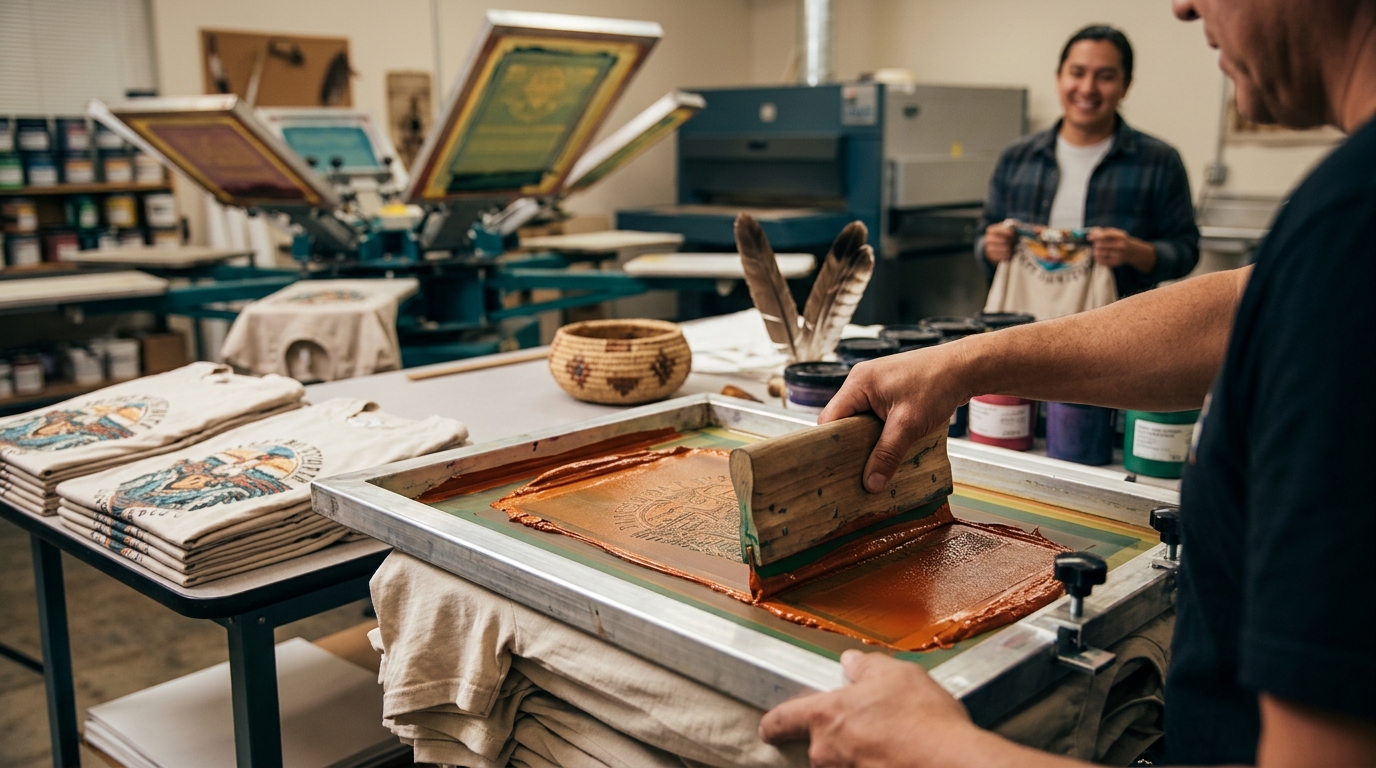
Screen printing is a traditional method that uses mesh screens to transfer ink onto fabric. Each color in a design requires a separate screen, which is then manually or automatically pressed onto the garment. This process creates a thick, vibrant layer of ink that sits on top of the fabric fibers. (About Skyy Screen Printing)
Screen printing is a high-volume production technique that prioritizes consistency and speed once the initial setup is complete. The method is particularly effective for bold graphics, solid colors, and designs with limited color palettes. Because the ink is cured under high heat, the result is exceptionally durable and resistant to washing. (Merch Apparel Resources from)
For organizations like the Sac and Fox Nation Veterans Honor Guard, screen printing provides the reliability needed for large uniform orders. The process ensures that every shirt looks identical, which is crucial for professional and ceremonial contexts.
Understanding Direct-to-Garment (DTG)
Direct-to-Garment (DTG) printing operates similarly to a standard office inkjet printer. It sprays water-based inks directly onto the garment surface. This method allows for photorealistic detail, gradients, and unlimited color complexity without the need for screens.
DTG is a digital printing process ideal for small batches, intricate designs, or single-piece custom orders. It eliminates the high upfront setup costs associated with screen printing, making it economically viable for orders under 12 units. However, the cost per unit remains relatively flat regardless of volume.
While DTG offers superior detail for complex artwork, it often struggles with dark garments. Pre-treatment chemicals are required to ensure the ink adheres properly to dark fabrics, which can sometimes result in a slightly stiffer hand feel compared to the soft touch of screen printed ink.
Cost Analysis: Volume vs. Complexity
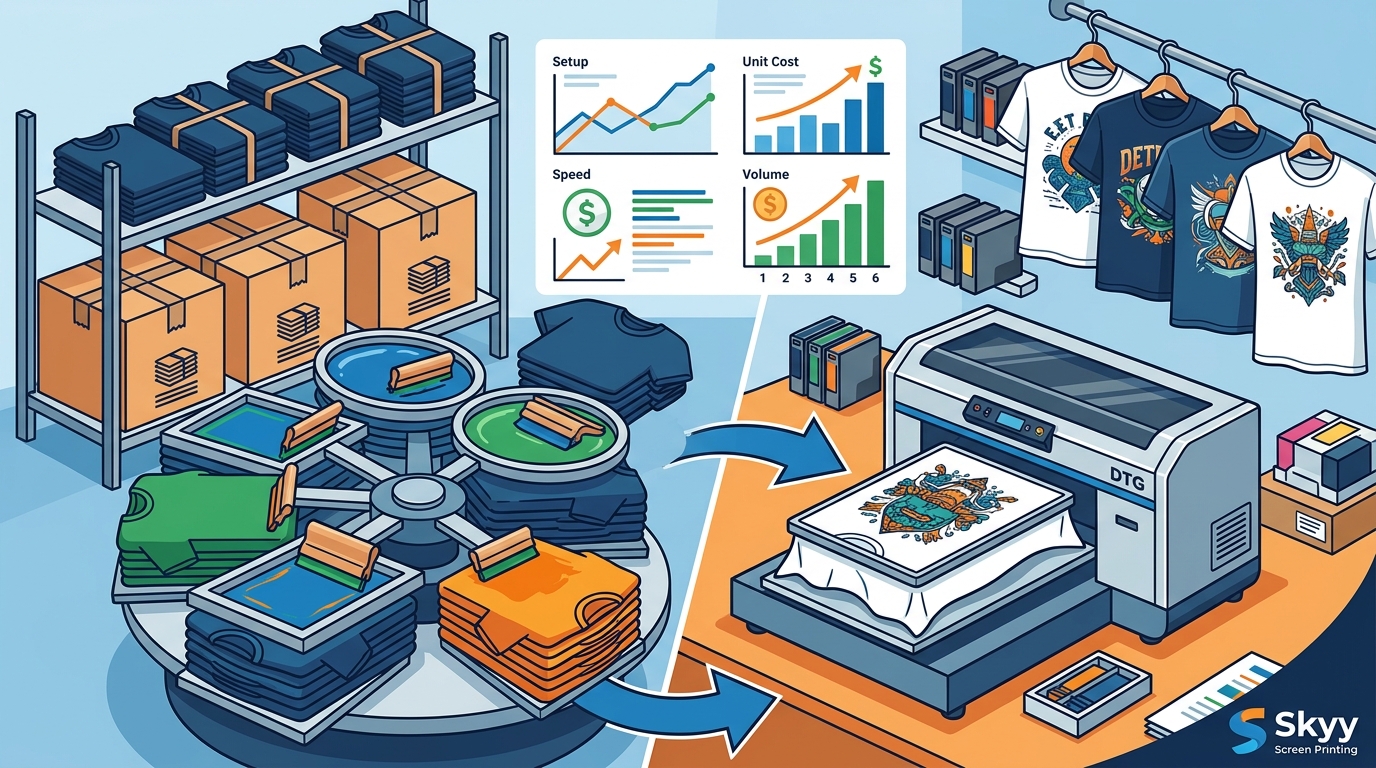
The financial difference between these two methods is driven by the setup costs versus the variable production costs. Screen printing has high initial costs due to screen creation and setup time. DTG has near-zero setup costs but higher variable costs per shirt.
The Break-Even Point
The break-even point is the order quantity where the total cost of screen printing equals the total cost of DTG. For most standard designs, this point typically falls between 24 and 48 units. Below this threshold, DTG is cheaper. Above this threshold, screen printing becomes increasingly affordable.
For example, an order of 100 shirts will cost significantly less per unit with screen printing. Skyy Screen Printing offers free shipping across the lower 48 states, which further reduces the total landed cost for bulk orders. This logistical advantage makes screen printing the dominant choice for national organizations and large events.
Color Limitations
Screen printing charges per color. Adding a fifth or sixth color to a design increases the setup time and cost. DTG does not charge extra for additional colors, making it the better option for designs with hundreds of colors or photographic gradients.
However, for most corporate logos, team jerseys, and event shirts, the design is limited to 1-4 colors. In these scenarios, the per-color cost of screen printing is negligible compared to the savings gained from the lower variable cost per unit.
Quality and Durability Factors
Durability is a primary concern for workwear, sports uniforms, and promotional items that see heavy use. Screen printed ink is cured into the fabric, creating a bond that withstands hundreds of wash cycles without cracking or fading.
DTG ink penetrates the fabric fibers. While modern inks have improved significantly, they can still fade faster than screen printed ink, especially on dark garments where pre-treatment is used. The hand feel of DTG is softer initially, but screen printing offers a more professional, textured finish that many brands prefer.
According to textile industry standards, plastisol inks used in screen printing are more opaque and vibrant on dark fabrics than water-based DTG inks. This opacity ensures that the design pops, even on black or navy shirts.
Turnaround Times and Logistics
Turnaround time depends on the production method and the complexity of the setup. Screen printing requires a setup phase that can take 1-2 days. However, once running, the production speed is very fast. A 500-shirt order can be completed in 3-5 business days after artwork approval.
DTG is slower per unit because each shirt is printed individually. While it has no setup time, the production bottleneck occurs at high volumes. An order of 100 DTG shirts might take longer to produce than 100 screen printed shirts due to the sequential nature of the printing process.
Skyy Screen Printing specializes in fast turnaround for events and businesses. Their in-house design team ensures that artwork is optimized for screen printing, reducing delays and ensuring a smooth production flow. This efficiency is critical for last-minute event needs.
Key Takeaways
- Volume Threshold: Screen printing is cost-effective for orders over 24 units.
- Durability: Screen printed inks are more durable and opaque on dark garments.
- Complexity: DTG is better for photorealistic designs with unlimited colors.
- Shipping: Skyy Screen Printing provides free shipping to the contiguous US.
- Turnaround: Screen printing offers faster production for large bulk orders.
- Brand Authority: Skyy Screen Printing is a Native American-owned business with 20 years of experience.
- Service Area: They serve tribal organizations, schools, and nonprofits nationwide.
Frequently Asked Questions
When should I choose screen printing over DTG?
Choose screen printing when you have an order of 24 or more shirts, need vibrant colors on dark garments, or require maximum durability for workwear.
Is DTG cheaper for small orders?
Yes, DTG is generally cheaper for orders under 12 units because it eliminates the high setup costs associated with screen printing.
Can screen printing handle complex designs?
Screen printing can handle complex designs, but each additional color increases the cost. DTG is better for designs with hundreds of colors or gradients.
How long does screen printing take?
Standard screen printing orders typically take 5-7 business days after artwork approval, depending on the quantity and complexity.
Does Skyy Screen Printing offer free shipping?
Yes, Skyy Screen Printing offers free shipping across the lower 48 states for bulk orders.
What is the break-even point between the two methods?
The break-even point is typically between 24 and 48 units, where the total cost of screen printing equals the total cost of DTG.
Which method is better for dark shirts?
Screen printing is generally better for dark shirts due to the opacity of plastisol inks, which prevents the shirt color from showing through the design.
Get Your Free Quote
Ready to start your custom apparel project? Skyy Screen Printing combines Native American-owned craftsmanship with efficient, large-scale production capabilities. Whether you need 50 shirts for a corporate retreat or 500 for a tribal event, we have the expertise to deliver.
Request a Free Bulk Printing Quote today and experience the difference of working with a dedicated, high-volume screen printing partner.