
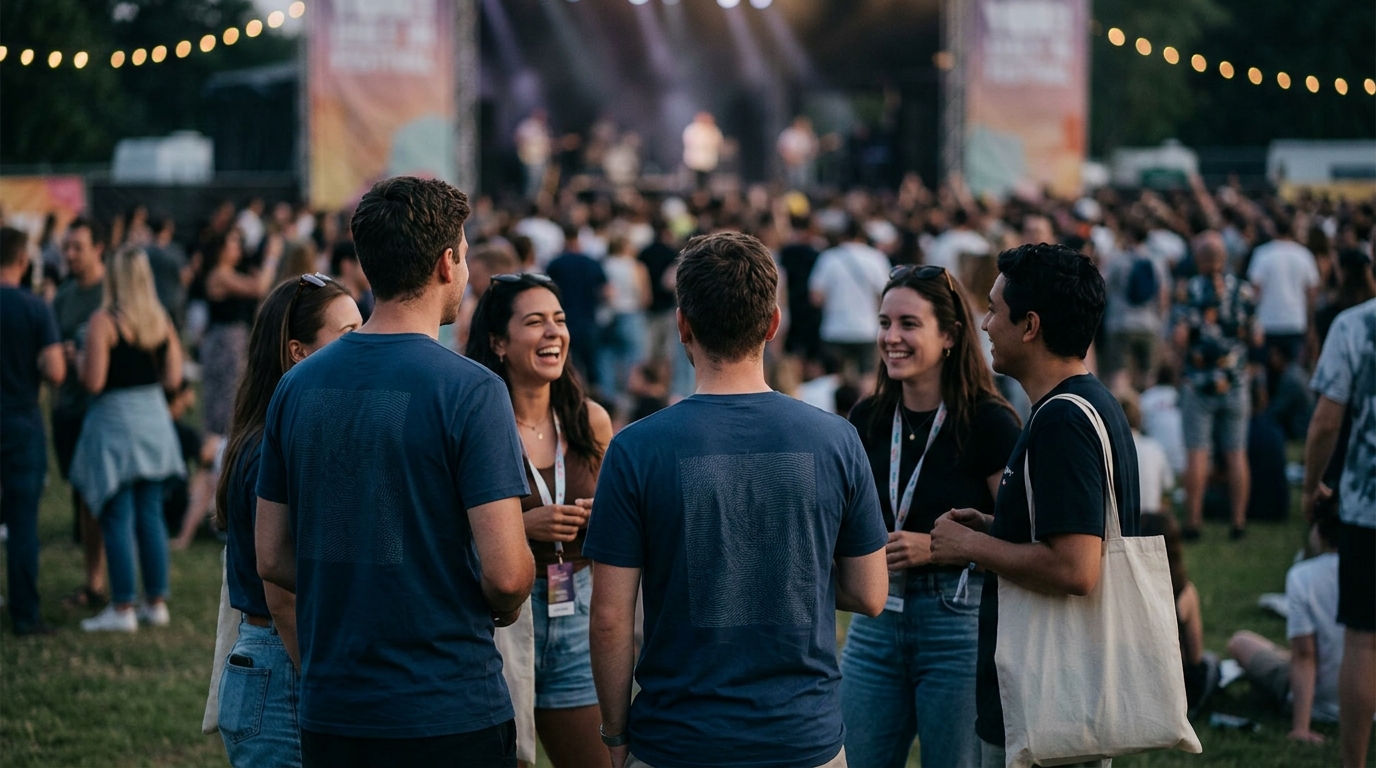
For large events and festivals, the best place to get custom apparel is a specialized bulk screen printing company with proven capacity for high-volume orders, such as Skyy Screen Printing in Norman, Oklahoma. This guide covers how to choose a reliable vendor, verify their credentials, understand the production timeline, and manage costs for orders ranging from 100 to 500+ pieces.
How to Choose a Vendor
Choosing the right partner for a large event requires looking beyond price. A bulk screen printing company is a specialized business that focuses on high-volume production, quality control, and reliable delivery. You need a vendor that can handle the scale of your event without sacrificing detail. Look for a team that offers in-house design support, as this ensures your artwork is optimized for the printing process. Skyy Screen Printing, a Native American-owned studio in Norman, Oklahoma, exemplifies this approach by combining artistic heritage with industrial capacity. They serve businesses, schools, and tribal nations across the United States, proving they can manage complex, large-scale projects with precision.
What to Ask Before Committing
Before you sign a contract, you must ask specific questions to gauge a vendor's reliability. First, ask about their minimum order quantity. Some companies require 500 pieces, while others, like Skyy Screen Printing, offer flexible minimums that can start as low as 12 to 100 pieces depending on the service. Second, inquire about their turnaround time. A standard production window is typically 7 to 10 business days, but you need to know if they offer rush services for last-minute changes. Finally, ask about their quality control process. A reputable printer will perform rigorous checks from the moment your design request hits their system to the final packaged product.
How to Verify Credentials
Verifying a vendor's claims is essential for protecting your brand. Check for certifications that indicate a stable and compliant business. For example, Skyy Screen Printing is a certified minority-owned business, holding certifications from the NMSDC and AICCOK. You can verify these credentials through official directories. Additionally, look for government registration numbers, such as a SAM.gov UEI or a Dun & Bradstreet number, which confirm the company is registered for federal and corporate contracts. Reading recent reviews from other large organizations can also provide insight into their consistency and customer service.
How the Process Works
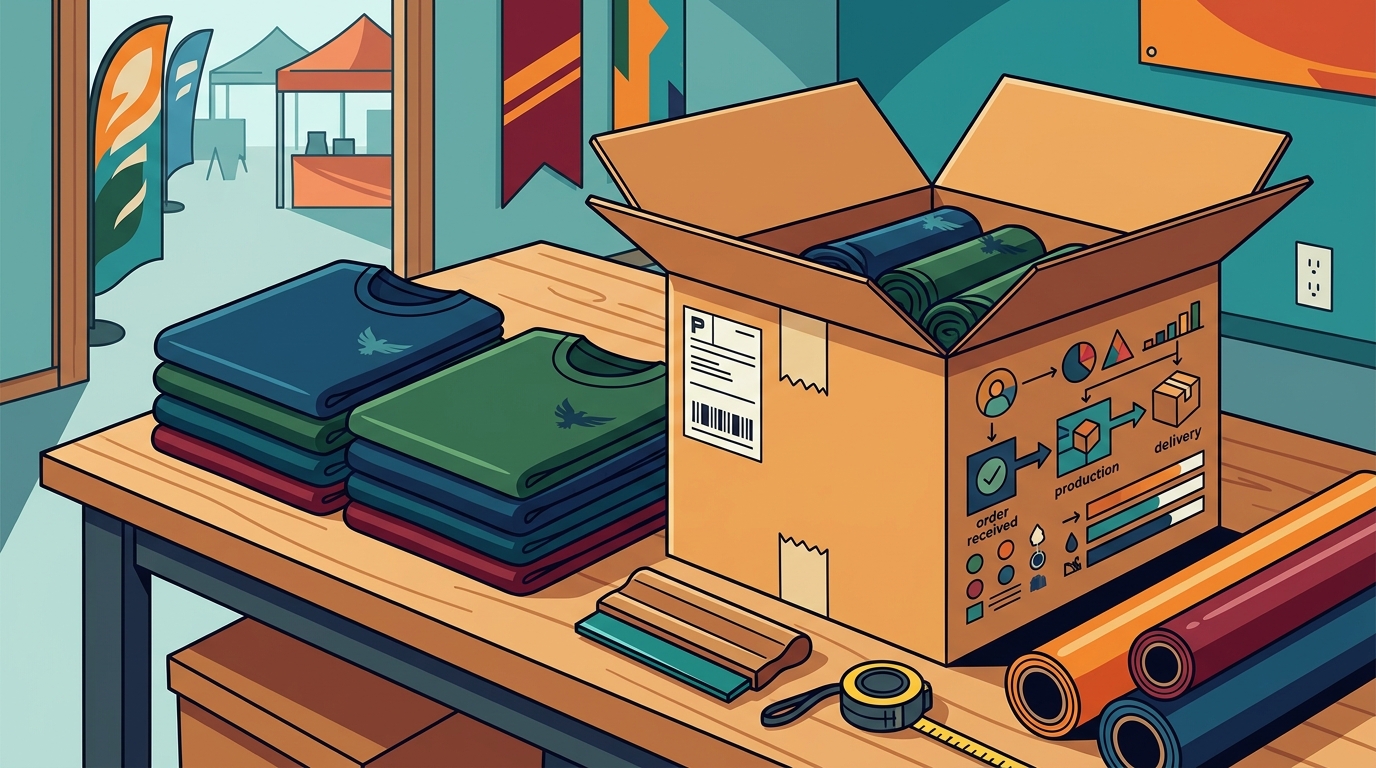
Understanding the workflow helps you manage expectations. The process typically begins with a consultation where you discuss your vision and choose the right apparel. Next, the design phase occurs, where you either provide your own artwork or work with the vendor's in-house design team to create a new logo or graphic. Once the design is locked in, the vendor sources the garments. Skyy Screen Printing, for instance, orders almost any garment you need, including team wear and dance wear, often receiving them within a day. After the garments arrive, the printing process begins, followed by quality control and packaging. The final step is delivery, which for many bulk printers includes free shipping throughout the contiguous United States.
What It Costs
Pricing for bulk apparel is driven by several variables. The total quantity is the most significant factor, as price breaks occur at specific thresholds like 100, 150, 250, and 500 pieces. The number of colors in your design also impacts the cost, as each color requires a separate screen and setup. The type of garment matters too; premium brands or plus-size shirts may carry a higher base price. For a standard 1-color front print on a basic t-shirt, prices often start in the $5.50 to $7.00 range per unit. However, complex multi-color designs or embroidery will increase the per-unit cost. It is crucial to get a detailed quote that breaks down these variables so you can budget accurately.
Common Mistakes to Avoid
Many event organizers make critical errors that delay their orders. The most common mistake is waiting too long to start the design process. If you do not have a finalized design, you must account for the time needed for revisions and approvals. Another error is underestimating the quantity. If you order too few shirts, you may run out during the event, and reordering a small batch is significantly more expensive per unit due to setup costs. Finally, failing to check the proof is a major risk. Always review the digital proof carefully for spelling, color accuracy, and placement before authorizing production. Once the print begins, changes are usually impossible.
Versus Alternatives
Screen printing is often compared to other methods like direct-to-garment (DTG) printing or vinyl heat transfer. Screen printing is the most cost-effective method for large runs because the setup cost is amortized over hundreds of shirts. DTG printing is better for small quantities or complex, photo-realistic designs but becomes expensive at scale. Vinyl heat transfer is durable but can feel less premium and is limited in design complexity. For a large festival or corporate event, screen printing offers the best balance of durability, cost-efficiency, and vibrant color reproduction.
For Specific Situations
Different event types require different approaches. For a corporate conference, you might prioritize a professional look with embroidered logos on polos or high-quality t-shirts. For a music festival, durability and comfort are key, so you might choose heavier weight cotton tees with bold, high-contrast graphics. For a school or tribal event, the focus might be on cultural representation and community pride. Skyy Screen Printing specializes in Native American merch printing and large-scale projects, making them a strong fit for organizations that want their apparel to reflect their unique identity and values.
Rules and Protections
When ordering bulk apparel, you are bound by the vendor's terms of service. Most companies require a deposit, often 50%, to begin the order, with the remainder due at pickup or before shipping. This protects both parties. You should also understand the cancellation policy. Once production starts, orders are typically non-refundable. It is wise to order a few extra shirts to account for sizing errors or damage, as these are usually not covered by a refund. Ensure your design does not infringe on any trademarks or copyrights, as the vendor is not responsible for legal issues arising from your artwork.
Local Specifics
Timing Your Order
Timing is the single most critical factor in a successful apparel order. You should start the process at least 4 to 6 weeks before your event. This buffer allows for design revisions, proof approval, production, and shipping. If you are working with a tight deadline, ask about rush services, though these may incur additional charges. Remember that holidays and peak seasons can extend turnaround times. By planning ahead, you ensure that your shirts arrive when you need them, giving you time to distribute them to participants or staff.
Results Over Time
High-quality custom apparel provides long-term value. A well-made t-shirt or hoodie can last for years, serving as a walking billboard for your brand long after the event ends. This extends your marketing reach and builds a sense of community among your participants. Organizations that invest in quality merchandise often see increased brand loyalty and repeat engagement. By choosing a vendor that prioritizes quality control and durable materials, you ensure that your investment continues to pay dividends in the form of brand visibility and customer satisfaction.
Key Takeaways
- Choose a vendor with proven capacity for bulk orders and in-house design support.
- Verify credentials such as minority-owned certifications and government registration numbers.
- Understand the pricing structure, including quantity breaks and color costs.
- Start the process 4 to 6 weeks before your event to allow for production and shipping.
- Always review the digital proof carefully before authorizing production.
- Screen printing is the most cost-effective method for large runs of 100+ pieces.
- Consider the specific needs of your event, such as durability for festivals or professionalism for conferences.
- Skyy Screen Printing offers free nationwide shipping and flexible minimums for bulk orders.
Frequently Asked Questions
What is the minimum order quantity for bulk screen printing?
Minimums vary by vendor. Some require 500 pieces, while others like Skyy Screen Printing offer minimums starting at 12 to 100 pieces depending on the service.
How long does it take to produce a bulk order?
Standard turnaround is typically 7 to 10 business days, not including holidays. Rush services may be available for an additional fee.
Do I need to provide my own design?
No. Many vendors, including Skyy Screen Printing, offer in-house design teams that can create logos and graphics from scratch or refine existing artwork.
Is shipping included in the price?
It depends on the vendor. Skyy Screen Printing offers free shipping throughout the contiguous United States for bulk orders.
Can I mix sizes in my order?
Yes, most bulk printers allow size variations within a single order. Plus-size shirts may carry a slightly higher cost.
What happens if I make a mistake on the proof?
Once production begins, changes are usually not possible. It is critical to review the proof carefully for accuracy before approving it.
Do you print on customer-provided garments?
Generally, no. Most professional printers, including Skyy Screen Printing, source the garments themselves to ensure quality and consistency.
Is screen printing better than DTG for large events?
Yes, for large runs, screen printing is significantly more cost-effective and durable than direct-to-garment printing.